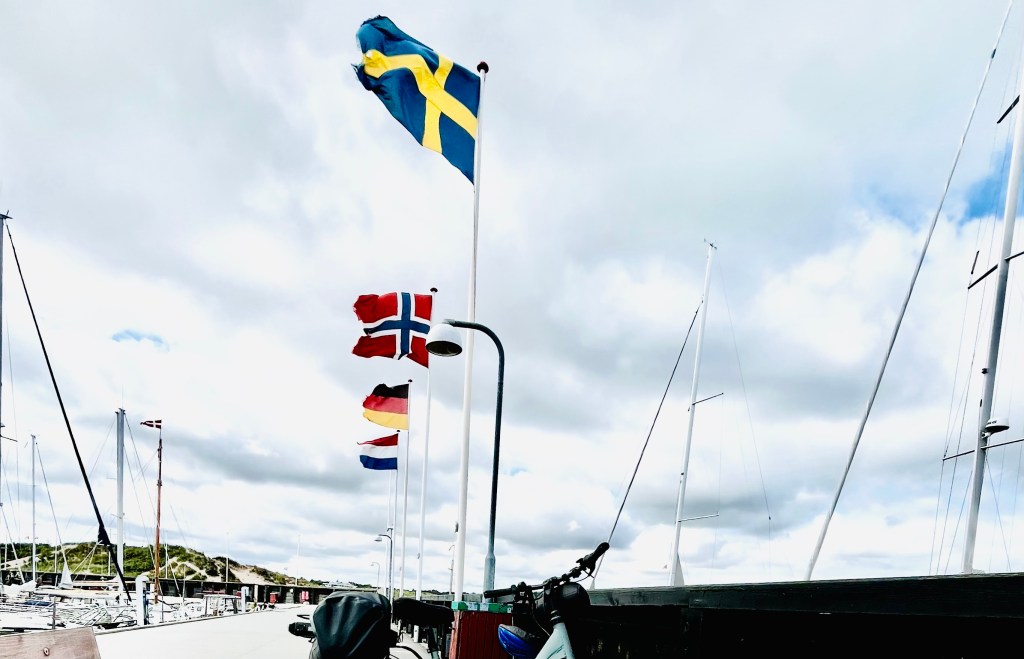
Arriving early in Hornbaek, all is quiet. There’s only the occasional flapping of lines on masts and a seagull calling out in bird Esperanto to anyone who’ll listen.
Up here on the north coast of Zealand you’re in another world. It’s a small community by the sea where life changes very slowly. The old smiling couple in the harbour kiosk are familiar faces. They’ve been here since our beloved Sheba and the bairns would come up for beach walks.
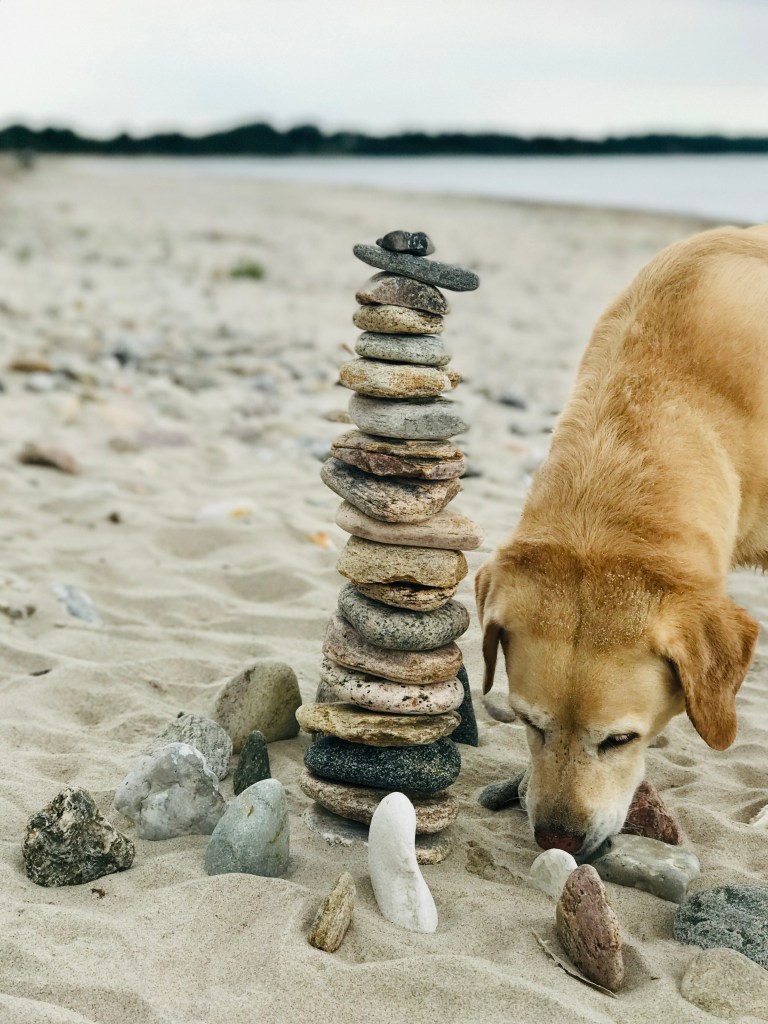
Outside the kiosk, the old machines that our kids loved are still there. A rarity these days, they dispense treats for a coin. Physical money is actually a seldom sight in modern digital Denmark, too.
You hear mainly English, French, German and Swedish spoken during the summer season, though hardly any American-accented tourists. There are almost no settlers up here either, unless you count people from Copenhagen, which the locals probably do.
On this late summer morning, it’s mainly sleepy sailors, wandering slightly dis-orientated towards the facilities.
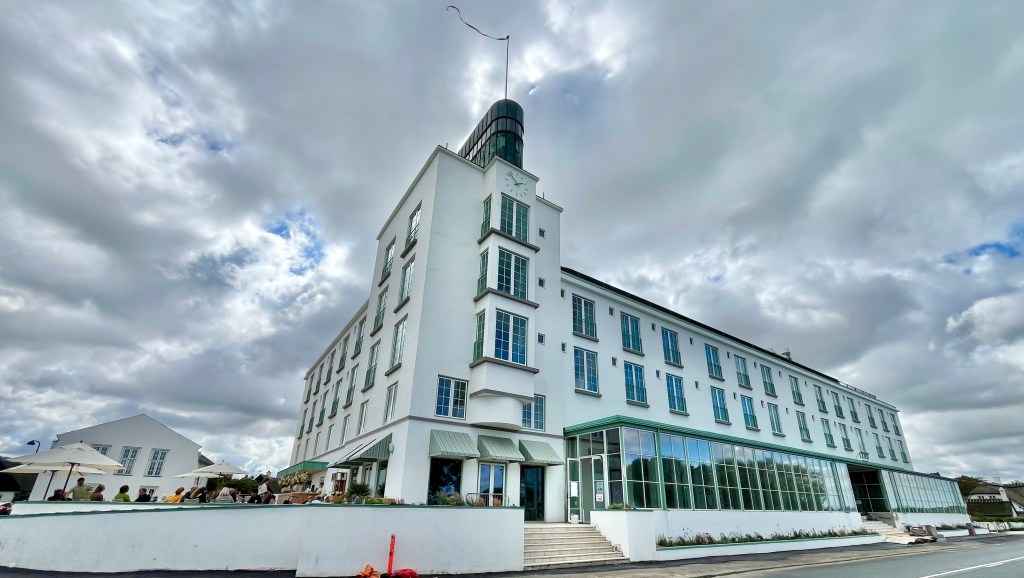
If you had been a frequent visitor to the town over the past years you’d have seen a remarkable transformation by the harbour. The old hotel, from the first part of the 20th century, has been renovated and upgraded. It’s gradually opening its doors to the public once again. The sea views across the Kattegat to Sweden from the upper floors and rooftop must be spectacular.
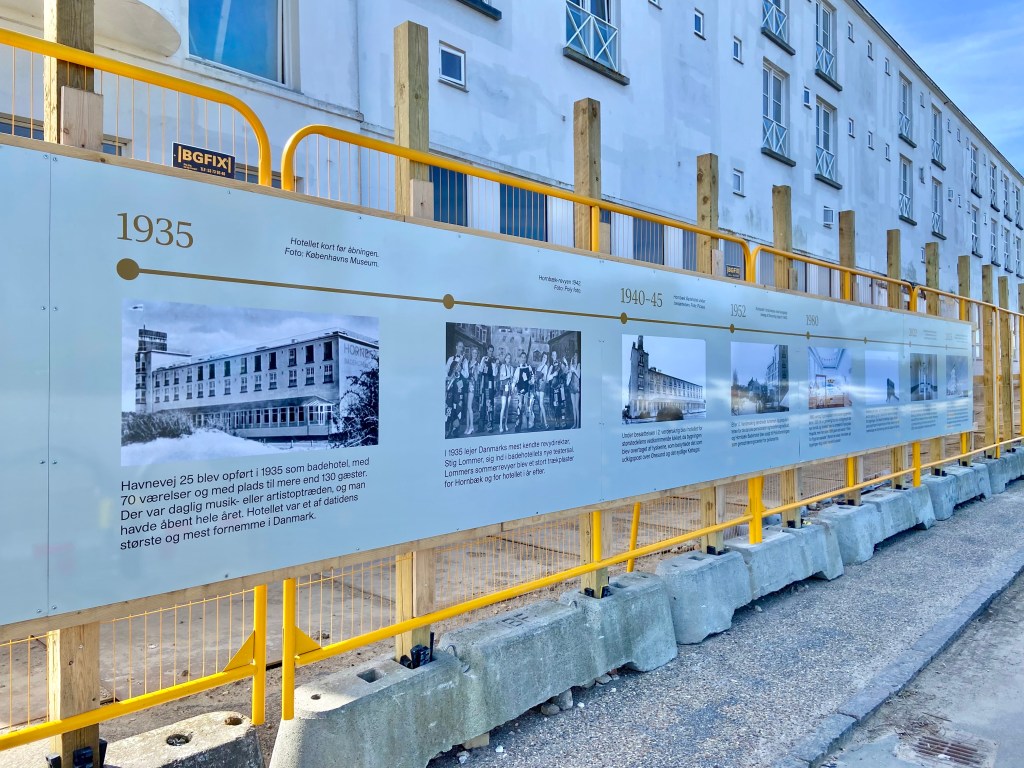
Hornbaek Hotel ‘reborn’ is another example of how a small independent country, that controls all of its revenues and resources, cares for its cultural — in this case, architectural — heritage.
I observed the same in Copenhagen the other day. The geological museum next to the botanical gardens is being renovated and expanded. I walked past with a former colleague and remarked how I admired Danes for their ability to maintain, upgrade and restore old buildings.
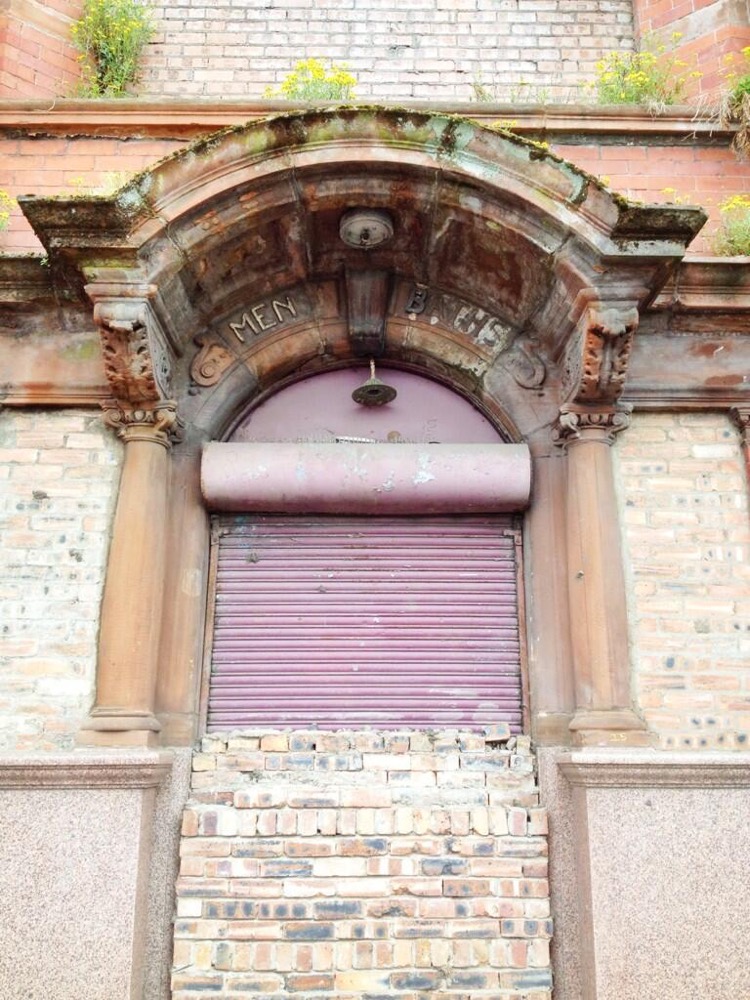
Not for them an Ayr Hotel left to rot for decades or Glasgow School of Art in post-conflagration limbo; or nearer to my childhood haunts, Golfhill School in all its inglorious atrophy and the auld frontage of the steamie and public baths on Whitevale Street.
“You are Danish now, aren’t you?” my former colleague asked.
“No, I’ll never be a Dane,” I replied.
“But didn’t you…?”
“Become a Danish citizen? Yes, but I’m still the same Scottish exile, merely granted citizenship rights.”
It is, of course, an impossibility to change one’s genetic makeup and change nationality. Into my fifth decade as an exile I’m no nearer becoming ‘a Dane’. I am, though, what is described as ‘well integrated’. I speak the language, engage in local society, pay my taxes — to all intents and purposes I’m ‘one of them’. Though, I’m not. I’m not sure there’s such a thing as a ’new Dane’ at all. It’s merely a euphemism for settler or immigrant. Of course, it’s not an issue, merely a fact of life for any exile.
By the way, my former colleague was quick to temper my praise of Danes. “Yes,” she said, “but the problem is we’re so smug and self-satisfied.” Here was an otherwise patriotic native pointing to unflattering national traits. Quite withering critique, too. That sense of objectivity and self-awareness is admirable.
It’s the land of our birth and upbringing that define us. Our national culture, our native language — the first voices we ever hear, beginning in the womb — that make us who we are.
I’ve no doubt my, as yet unborn, children’s children, if they choose to live here, will probably consider themselves Danish. Assimilation is a process that takes many generations.
Personally, I believe civic nationalism is for the birds. It is a nonsense dreamt up by Scots who place so little value on our national identity that it’s conferred on anyone who arrives in Scotland, whether they like it or not. Telling incomers, ‘You’re one of us’ is a nice gesture but it can never be true. It is also to disrespect the national and cultural identity of people who arrive in Scotland, and who may wish to remain who they are. It’s not for we Scots to tell them they’re ‘one of us’. Far better to say, ‘We’ll treat you as one of our own, all we ask is that you respect our country, our languages, our laws, and our way of life.’
The topic of immigrants is never far from the headlines on this side of the North Sea. So the idea of one million (say German or Polish) settlers would cause a political storm sooner rather than later. The effect on the franchise and voting patterns would be huge. Over time, the makeup of parliament and local councils would change entirely — as could foreign policy. The strain on public services would be unimaginable. Who knows, perhaps the idea of a union would eventually be aired, with a much larger country essentially subsuming little Denmark and its silly ‘corrupt German’, as some might begin to describe it — in an attempt to denigrate and sideline the indigenous language.
Settlers whose identity is bound up with the land of their birth, its history, its politics, it’s national outlook, could eventually begin to dismantle the indigenous cultural identity of their host nation.
Recent stories about incomers and overseas owners creating local disruptions on Scotland’s West Coast are things that would probably not happen over here, though. Denmark is generally welcoming to visitors and incomers from EU countries, but there is a huge difference between being welcomed as a settler, willing to integrate, and arriving with a sense of entitlement and a neo-colonial attitude.
Settlers and temporary residents cannot vote in national elections or constitutional plebiscites. Without citizenship you are confined to the local council franchise. Seems fair enough.
Whether we’re willing to accept it or not, small nations cannot survive massive inward immigration. If it’s true that almost one million people have moved from England to Scotland since devolution, we are facing the greatest challenge to our national survival, as a people, since 1746. By way of contrast, the actual number of modern incomers from Germany to Denmark is no more than about 25,000.
Post-indyref research showed a majority of indigenous Scots voted Yes in 2014. By our own Claim of Right, we chose independence. But what do politicians know about our constitution or Scots Law? The mechanics of the 2014 indyref was a farce on so may levels. And we still have the likes of Stephen Flynn insisting that the Westminster parliament is ‘sovereign on these isles’. How can such a constitutional ignoramus represent Scots, never mind a nationalist party?
It was the settler and temporary-resident vote that swung it to No in 2014 — making a complete mockery of the entire concept of civic nationalism. The franchise was absurd and should never have been agreed upon. That is why a UN-mandated franchise is essential for any future plebiscite. Otherwise we have the colonial power, England, issuing and counting the votes, including postal ballots. The fatal flaw in using an election as a de facto referendum is that our neighbour, clearly opposed to Scottish state restoration, runs the whole show via its Electoral Commission.
We also have major home-grown hindrances on the path to national recovery and restoration: numerous ‘proud Scots’ willing to sell their birthright for a non-existent ‘British identity’; our now ineffective and defunct nationalist party, and the cultish, ill-informed voters who return said party time and again.
Obviously, choosing a Scottish-based party on the ballot makes sense. However, voting for clueless careerists — happy to win elections solely in order to maintain the lifestyle to which they’ve become accustomed — will not advance the national cause. Other pro-independence parties exist, made up almost completely of the best of the SNP, hounded out under Sturgeon’s appalling decade of disgrace. ( see: Alliance to Liberate Scotland and ISP )
Our language and culture are already severely eroded after years of annexation and colonial rule. Unless we regain control of our borders, our land ownership, and not least, our media, we are in danger of national erasure. In that regard, please consider joining/supporting Salvo or Liberation Scotland
“We either liberate or the people and nation perish”

