by Professor Alf Baird
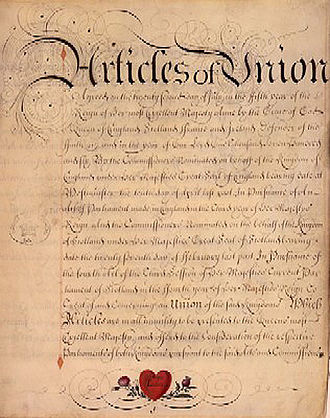
Browsing, as you do, through the Westminster Privileges Committee’s second report from October 1999 reveals some quite astounding realities surrounding the constitution of the UK parliament and Scotland’s position in that regard. This also seems relevant given ongoing questions as to why none of Scotland’s three elected majorities of MPs since 2015 have pulled the plug on the mankit Union.
The Privileges Committee report confirms that the UK parliament primarily exists only so long as Scotland’s representatives turn up there. In other words Scotland has been de jure independent since the first of three majorities of SNP MPs were elected in 2015, as many in Scotland believed. Don’t the SNP know anything about the Articles of Union, or are they just another ‘parcel o rogues’, heavily infiltrated? Ignoring the Articles of Union, its conditions, and Scottish sovereignty, whilst playing fast and loose with Scotland’s liberation cause, suggests the latter.
Let’s consider in more detail what a Westminster committee and its legal advice is on Scotland’s status and how the Anglo-Scottish Alliance may be ended:
The treaty included Scotland’s right to representation, viz:
“7. (ii) The Parliament of Scotland did impose conditions when in 1707 it transferred power to the Parliament of Great Britain;
(iii) One condition imposed by the Parliament of Scotland was the right provided by Article XXII for Scotland to be represented in the House of Lords and in the House of Commons;
(iv) That right expresses a principle of representative Government that has the same force today that it had in 1707″
There is also confirmation, if needed, that this is an international treaty:
“8. The Acts give effect to the international Treaty of Union”
The Scottish Parliament limited the powers of the new (UK) parliament, confirming that supreme sovereignty over Scotland remains with the Scottish people and their representatives, viz:
“15. The Parliament of Scotland did qualify the authority that it was giving to the Parliament of Great Britain. This can be clearly discerned to have been the legislative intention of the Parliament of Scotland. It can be found in the Articles of Union. It has been acknowledged in the Parliament of Great Britain, and has been the subject of judicial and extra-judicial recognition.”
This is also confirmed by the following remarks, and that:
“16. The Articles disclose an intention that some provisions should be alterable by the Parliament of Great Britain, and that some provisions should not be alterable by the new Parliament”
That the UK parliament as a creature of the union remains subject to the two sovereign powers – the kingdoms of Scotland and England – who ratified the treaty creating it, viz:
“20. That the British Parliament were absolutely bound up by the stipulations of this treaty; that they being a subsequent power to the two respective Parliaments of either kingdom, had no other or farther power to act than was limited to them by the stipulations of both kingdoms . . . That the Parliament of Britain, being the creature of the Union, formed by express stipulations between the two separate Parliaments of England and Scotland, cannot but be unalterably bound by the conditions so stipulated, and upon which it received its being, name and authority.”
That the joint UK parliament only has power limited by the Treaty and is not therefore superior to the signatory parties who agreed to its creation:
”25. affirmed by the House of Lords, 20 May, 1808 (Connell, Vol II, pages 122-123), a Court of Thirteen Judges, sitting as the Court of Teinds, was satisfied that there were certain fundamental provisions of the Articles of Union which were not alterable by Parliament.”
That any breach to the Treaty would lead to fundamental consequences for the UK parliament, of which there is given numerous examples, and here is two, e.g.:
“25. (iii) In Earl of Kinnoull v Presbytery of Auchterarder (The Auchterarder Case) (1838) 16 S 661 Lord Moncrieff said that a breach of the ecclesiastical provisions of the Union would be a direct breach of what was fundamental and essential in the political state of the United Kingdom.”
“(v) In the case of MacCormick v Lord Advocate, 1953 SC 396 (First Division), the Lord Advocate, Lord Clyde, on behalf of the Crown expressly acknowledged that there were fundamental and unalterable provisions of the Articles of Union which Parliament could not legally repeal.”
That the legislative power of the UK parliament is therefore restricted by the articles in the Treaty:
“27. The Union of Scotland and England was founded upon the agreement expressed in the Articles of Union. The agreement qualified the legislative power of the Parliament of Great Britain with respect to the Articles of Union.”
And a fundamental condition of the Treaty is that Scotland must be represented within the UK parliament:
In order for the UK parliament to legislate and function it must therefore include Scottish representation:
“30. It is apparent from the purpose of Article XXII that the Parliament of Scotland did not intend the Parliament of Great Britain to be able to alter it so as to remove Scotland’s representation.”
“31. Article XXII had and has unique importance. That is because a continuing right to representation in the Parliaments of Great Britain and the United Kingdom is the sole guarantee that representatives of Scotland may participate in the passage of legislation on all of the matters over which Parliament has, by virtue of Article III, authority to legislate for Scotland.
That the kingdoms of Scotland and England remain as distinct legal entities constituting their ‘creature’, the UK parliament, the latter’s power limited and conditioned by the Articles of Union:
“29. Article III of the Articles of Union transferred authority to legislate for Scotland from the Parliament of Scotland to the Parliament of Great Britain. Article XXII provided that, in the new Parliament, Scotland would be represented in the House of Commons and in the House of Lords.”
” 36. Applying the foregoing to Article XXII, (a) the Kingdoms of Scotland and England continue to be acknowledged by the law to be distinct entities”
And, that representation of both kingdoms is necessary for the UK parliament created by them to function on their behalf:
“40. that as long as the Union endures, Scotland has an interest in a guarantee of representation in both Houses of the United Kingdom Parliament.”
“41. Article XXII can straightforwardly be construed to have the flexibility needed for the development of constitutional government, while also securing its central purpose; it requires that Scotland has the right to representation.. “
The UK parliament is thus conditional on the Articles of the Union, and would cease to have effect if the Union were to be ended by either signatory party to it:
“45. The Articles of Union are the conditions of the Anglo-Scottish Union. They were referred to as such at the time of their enactment. They are not a perpetual restraint on Parliament. They are the conditions of the present Union, which was created by Article I. If the Union is dissolved, the conditions in the Articles cease to have effect.”
And, that the UK parliament may be dissolved following withdrawal by either or both kingdoms from the Anglo-Scottish Union:
“46. The United Kingdom Parliament can dissolve the Union. Article I is not entrenched. That is apparent (1) because the Articles only bind Parliament as conditions of the Union established by Article I; and (2) because it would be contrary to common sense to argue that the English and Scottish peoples could never by a lawful route democratically decide upon independence from one another.”
Just as member states may withdraw from the EU treaty, so the UK’s ‘member states’ may do likewise insofar as the Treaty of Union is concerned:
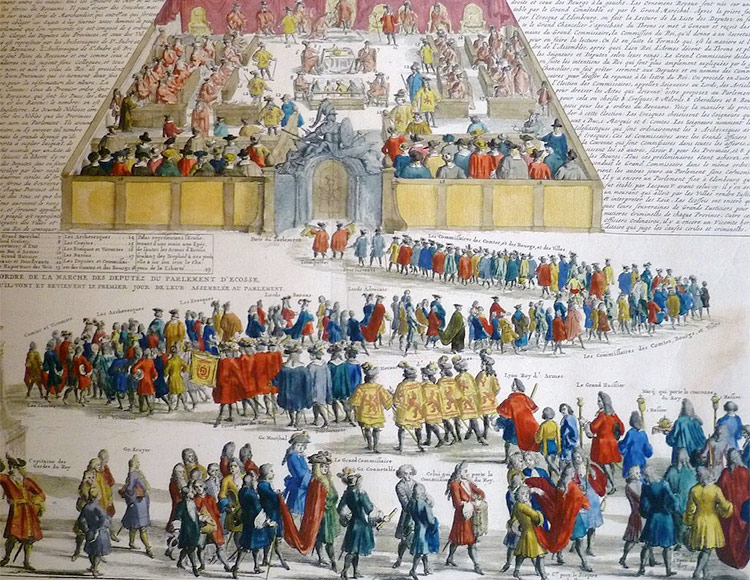
“47. Comparison with membership of the European Union is apt. The effect of European Union law is that Parliament cannot legislate inconsistently with the EC treaty, short of the United Kingdom leaving the Union by Act of Parliament.
There is nothing in the Union Act that prevents its repeal:
“51. Article I of the Union of England and Scotland, and the conditions attached thereto, can both be repealed. In enacting such a repeal, Parliament would inevitably make provision for the constitutional position thereafter. This could involve the independence of the two countries or the settlement of the terms of a new Union of the two countries.”
The UK parliament cannot exclude or function without Scottish representation, which means that without such representation it would be unlawful for the joint UK parliament to legislate for Scotland:
“54. 1. when the Parliament of Scotland transferred power to the Parliament of Great Britain it was possible for it to impose restrictions on that power as a condition of Union.
2. Because the Parliament of Scotland did not intend the Parliament of Great Britain to be free to exclude the representation granted to Scotland by Article XXII.”
In summary, the Articles of Union limit the power of the UK parliament as condition of the Treaty; the right to representation at Westminster from Scotland remains a fundamental condition of the Treaty; the UK parliament therefore remains subject to the superior (i.e. sovereign) power of the Treaty’s signatory parties, that is the sovereign kingdoms of Scotland and England; either of whom may permanently withdraw their representatives from the UK parliament, following which the Union Act would be repealed.
House of Lords – Privileges – Second Report (parliament.uk)