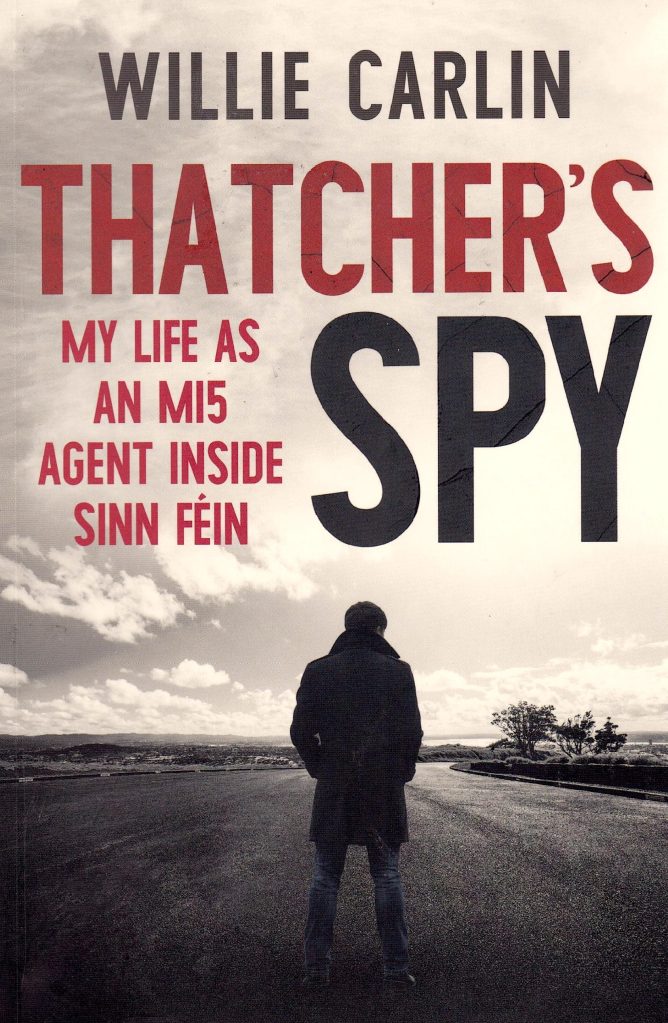
I’d never heard of Willie Carlin. But his name came up as I was scanning the Danish library app. I was looking for books about the political history of Ireland, as you do. The Irish, after all, are independent, whereas we Scots, well.
‘Thatcher’s Spy’ is the title of his book. Basically, it’s the story of an 11-year infiltration of Sinn Fein between 1974 and 1985. It’s biographical but written in the style of a thriller. That said, books like this are not usually accurate in every detail, state vetting probably sees to that. Nevertheless, there are some observations in it that chime in a Scottish context.
Those who are old enough will probably remember the beginnings of the Troubles. The TV images were in colour, but in my mind’s eye events in late 1969 are all in black and white. Belfast and Derry looked like a rainy Easterhouse with riots. ITV and BBC must have had some good reporters in those days because there was, if I recall correctly, some fair-minded reporting from both communities. But like most 14-year-olds, it was all too bleak for me. The Moon landings and Monty Python kept this young Scot sane in the years between 1969 and 1972.
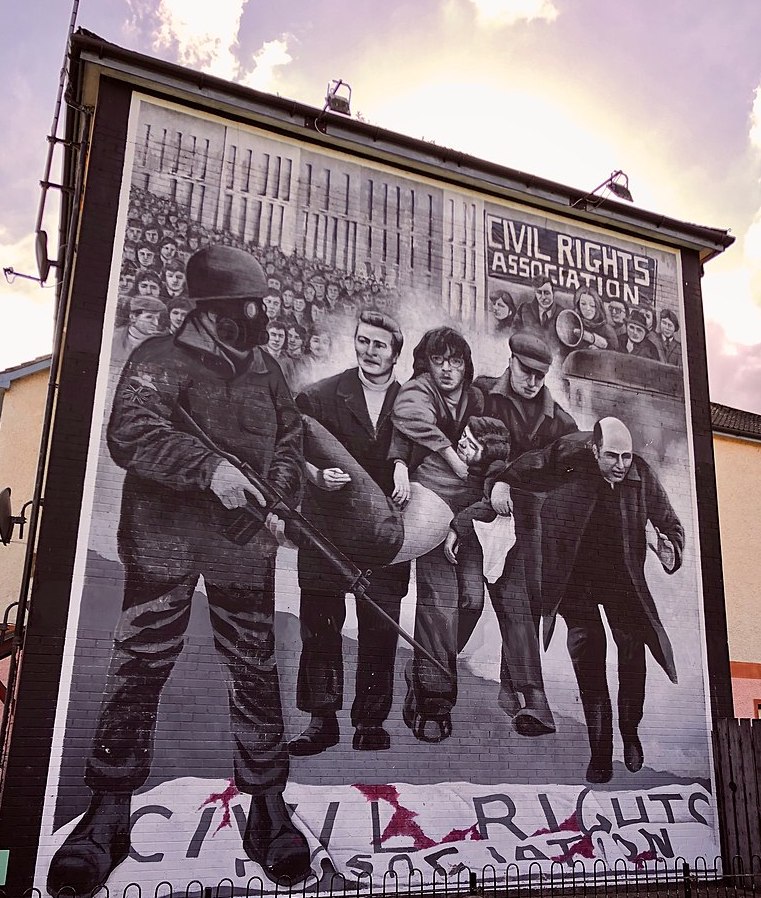
The nightly TV coverage of shootings, bombings and sectarian murders was truly awful. It was also puzzling, as I had no idea why the Catholic community in Ireland was protesting. I learned little enough about Scottish history at school, never mind Ireland’s. The lasting impression was that the Catholic or nationalist community was somehow responsible for violent riots. Of course, the fact that peaceful civil rights protesters were set upon by loyalist mobs, backed up in many cases by the Royal Ulster Constabulary, never quite got through. The violence of settlers and the police — an eerie echo of the West Bank in 2023.
Willie Carlin was from a Catholic background but had ended up in the British army as a youngster. In 1974, he returned across the Irish Sea with his wife, having first enquired if it was safe for him, as a former British soldier, to return. Once home, his mission was to send back reports on political developments. In fact, it seems to have been his abhorrence of violence that led him to accept his undercover role. He excelled as a community worker and came to the notice of Sinn Fein. Highly valued and trusted implicitly by the party, he was asked to join. Back in England, his handlers were sifting through the intelligence he was providing on key figures. It seems that at least one part of the British establishment was keen to find a political solution to the Troubles. If that meant coaxing the gunmen into politics, so be it.
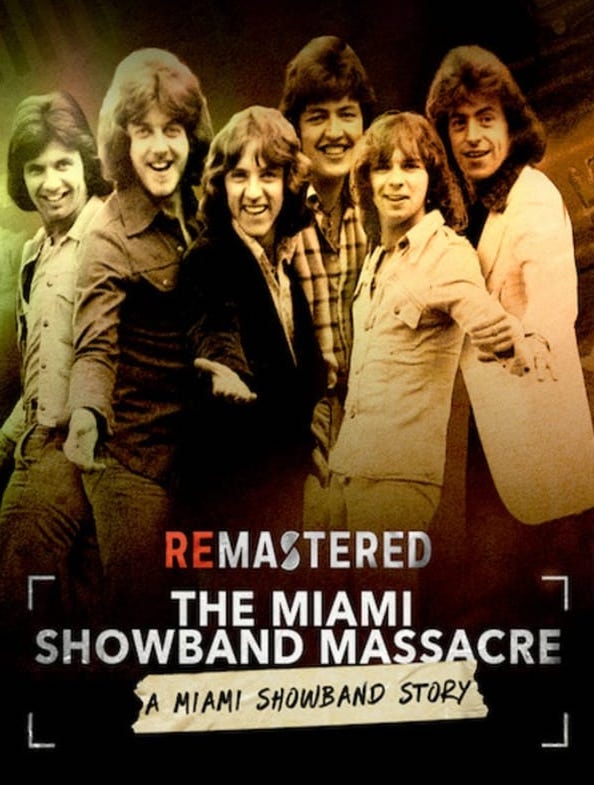
When we think of infiltration of the IRA, we tend to imagine double agents passing on information to the shoot-to-kill lot, or to loyalist fanatics who were, essentially, terrorist murderers for ‘Queen and country’. This did happen, and justice for the crimes of collusion are still pursued by relatives of victims to this day. The Miami Showband Massacre and the murder of Pat Finucane being just two of these outrages.
In Carlin’s case, though, there seems to have been divided loyalties, at least that’s what his handlers thought. His information was valued, but he wasn’t entirely trusted due to his closeness to Martin McGuinness, and his own ‘nationalist’ sympathies. Also, the fact that he wasn’t doing it for money raised suspicions. The British intelligence crowd in the north of Ireland were used to people offering their services for financial reward.
One interesting aspect is that Carlin was seen as a long-term project. If he’d not been betrayed, from a most unusual source, he may have risen to the very top of the political sphere he worked in. Not so much a sleeper as an upwardly mobile, bright-eyed and bushy-tailed political activist.
What this all reveals are the lengths to which the British state (or England, as it should probably be called) will go, to keep the land mass and resources of the Celtic nations under the control of London and the English crown. If infiltration was widespread in the six northern counties, then it seems unthinkable that it’s not equally, if not more, widespread in today’s nationalist Scotland and Wales.
Scotland, of course, is the jewel in the crown. With our nation’s vast resources, we Scots could be citizens of one of the richest nations in the world. Currently, our people are something akin to East Germans gazing at the riches of free nations. Our Berlin Wall is the Union, its bricks and hindrances to freedom being a fake 300-year-old treaty, and the apparatus of the British state. Essential to this apparatus is its iron-grip control of broadcasting and its ubiquitous unionist press.
1707 was nothing more than an annexation of our country. A kind of Anglo-Saxon ‘anschluss’, achieved via bribery, threats and intimidation. That it has been maintained is due, in no small part, to Scots who do London’s bidding either openly or in secret. Openly, we have three political parties in Scotland run by London, and for London. Why is this even allowed? They could at least be registered as Scottish parties. Instead they are branch offices. Votes for Labour, Tory or LibDem in Scotland are Scottish votes for English rule — for colonial rule.
Labour think they are heading for a revival, and voter’ disgust with the nihilistic SNP under current management, may see the Scottish unionist electorate dog returning to its sick. Labour talk about ‘change’ but a vote for Labour is a vote for genocide-apologist Keir Starmer, the Tony Blair of the 2020s.
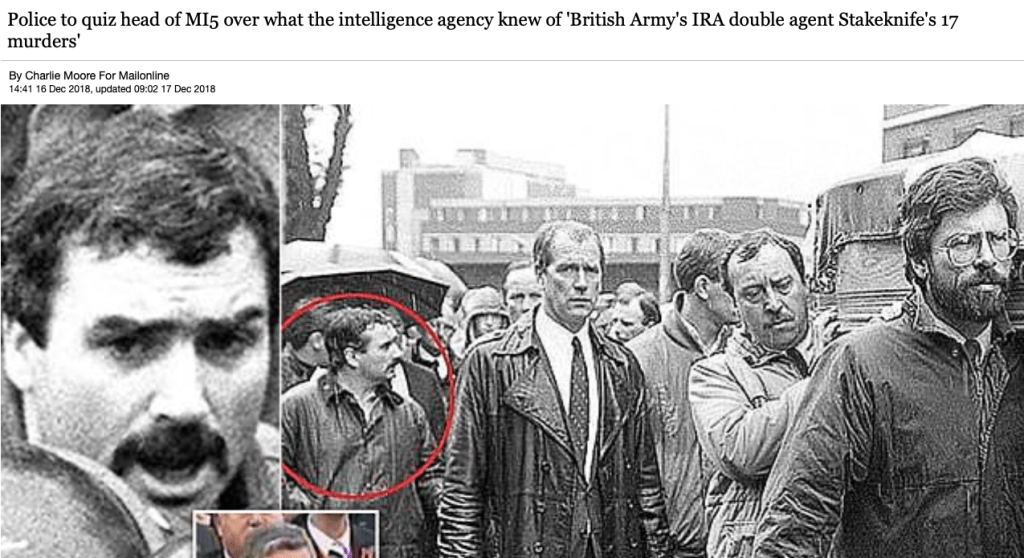
Willie Carlin’s 1985 exit from the north of Ireland was sudden and unexpected. In fact, it was only a matter of hours before he was due a visit from Freddie Scappaticci, the IRA’s enforcer and informant killer. The irony, of course, was that Scappaticci himself was a British-state infiltrator. And the information that led to the exposing of Carlin came from yet another informer. In a twist almost too incredible for fiction, it turned out that Willie Carlin’s first ‘handler’ was none other than an MI5 agent who was later imprisoned for his role as a Soviet agent. Remarkably, among his fellow prisoners were some IRA men. The story goes that he told them about a mole called ‘Willie’ who was close to McGuinness. This may be true, or perhaps just a tale to disguise another — as yet unknown — highly-placed source within the nationalist movement. Whatever the truth, it really was infiltrators agogo.
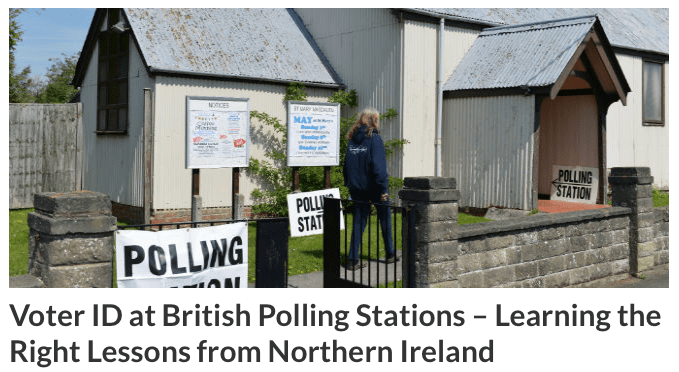
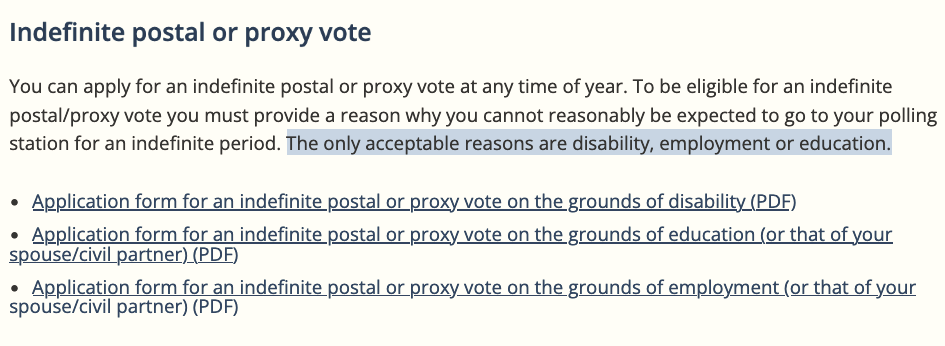
The book ends with some extremely pertinent observations about ‘personating’ or vote-rigging. Personation involves voting multiple times and was widespread in the north of Ireland under the motto of ‘vote early, vote often’. Carlin’s revelations about the mechanics of ballot-rigging led to a change in the voting laws in the north of Ireland. This was lauded as historic progress, yet, those same laws remain unchanged in the rest of the UK. This seems inexplicable, since marginal constituencies can easily be swayed by even small voting irregularities of a few hundred ballots. But perhaps this is exactly why the laws have not been changed in rUK, particularly to harmonise with the more strict laws on postal ballots in the British partition. “Living in Scotland,” Carlin writes, “and being an SNP sympathiser, often tempts me to approach some local activists and show them how to achieve this feat [of personating].”
Reading this jolted a memory from the 2017 general election. That was the election when many of us were perplexed by First Minister Sturgeon’s underwhelming, uninspired performances during debates. The unexpected loss of so many SNP MPs at the first post-Brexit election did not sit right with me. Scotland was ripe for independence. One poll put support at 60%. European citizens and many No voters were ready to vote Yes. And what did we get? A lacklustre campaign, a disengaged First Minister, and some truly bizarre results. The 56 became 35, still a victory but announced as a defeat by the organs of state propaganda. Not long after, the plot to defame and destroy Alex Salmond gathered momentum. Gender activism came from nowhere and replaced independence as the SNP’s main focus, hardly coincidental at the very moment the break-up of the UK looked inevitable.
Only those who refuse to believe the evidence of their own eyes, dismiss the claim that the SNP has been infiltrated. Perhaps 20 years from now, we’ll get a mea culpa from an informer, an infiltrator who had ‘divided loyalties’. Whether these North Brits work from some sense of monarchial Anglo-Saxon idealism, for financial gain, or due to coercion, is neither here nor there. What we do know, is that within less than a decade the SNP has been neutered, its focus shifted, its electoral prospects diminished, and most of its gerrymandered MPs and MSPs now unfit for public office.
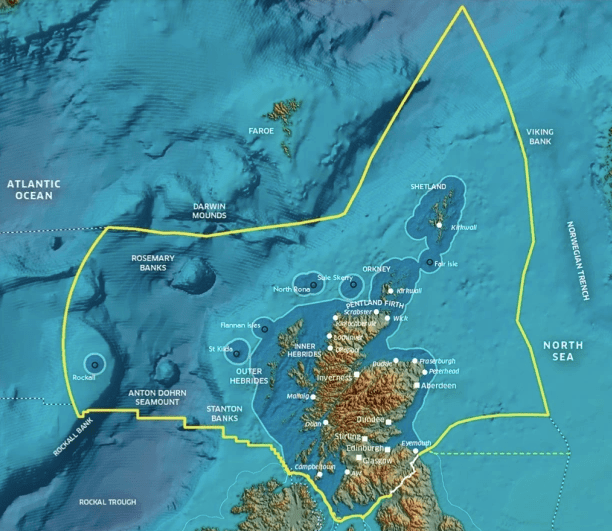
Without wanting to sound disrespectful to our Celtic cousins, the British partition, known as Northern Ireland, pales into insignificance when compared to the Scottish colony with its vast natural resources, land mass, and maritime waters. If London spent decades attempting to keep an economically-faltering Northern Ireland ‘British’, how much more effort have they put into keeping asset-rich Scotland chained to an imaginary Union of equals?
 peteryoung.dk