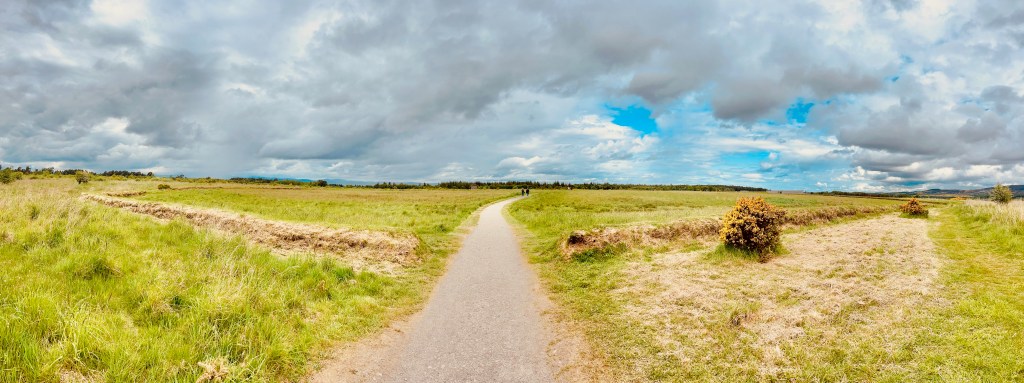
I’m walking on Culloden Moor, the site of the last pitched battle in the United Kingdom, which took place in April 1746. Today, this is a peaceful place, a memorial site, and there are just gentle breezes and birdsong to experience.
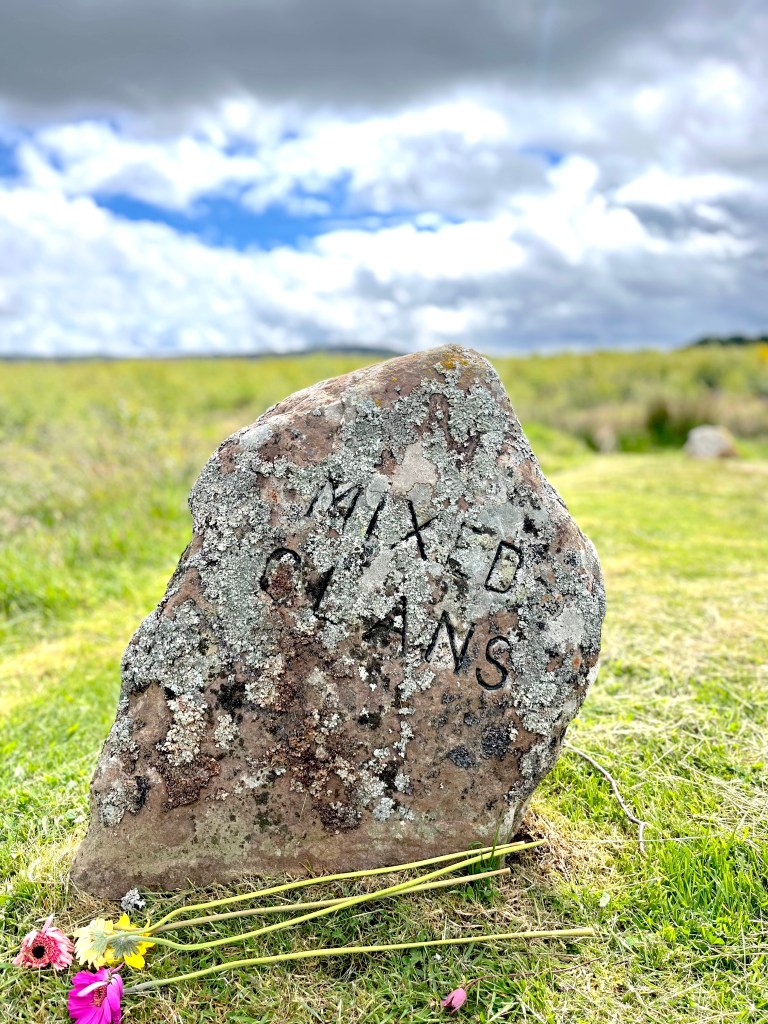
But as you go around, you will see the markers of the graves of those who fell in the battle. About 1,500 Jacobite soldiers lie buried here, most of them, according to their clan. There are stones marking the positions of the different Scottish clans. I’ve stopped at the stone of the Fraser clan. Four hundred men stood here on April the 16th, 1746.
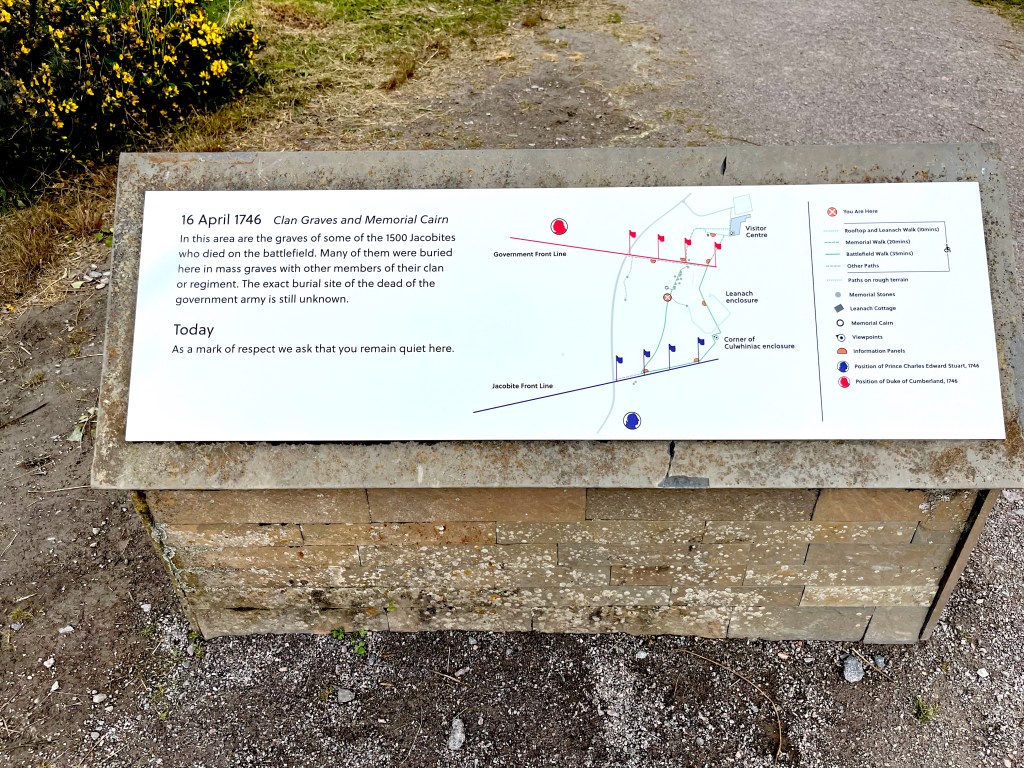
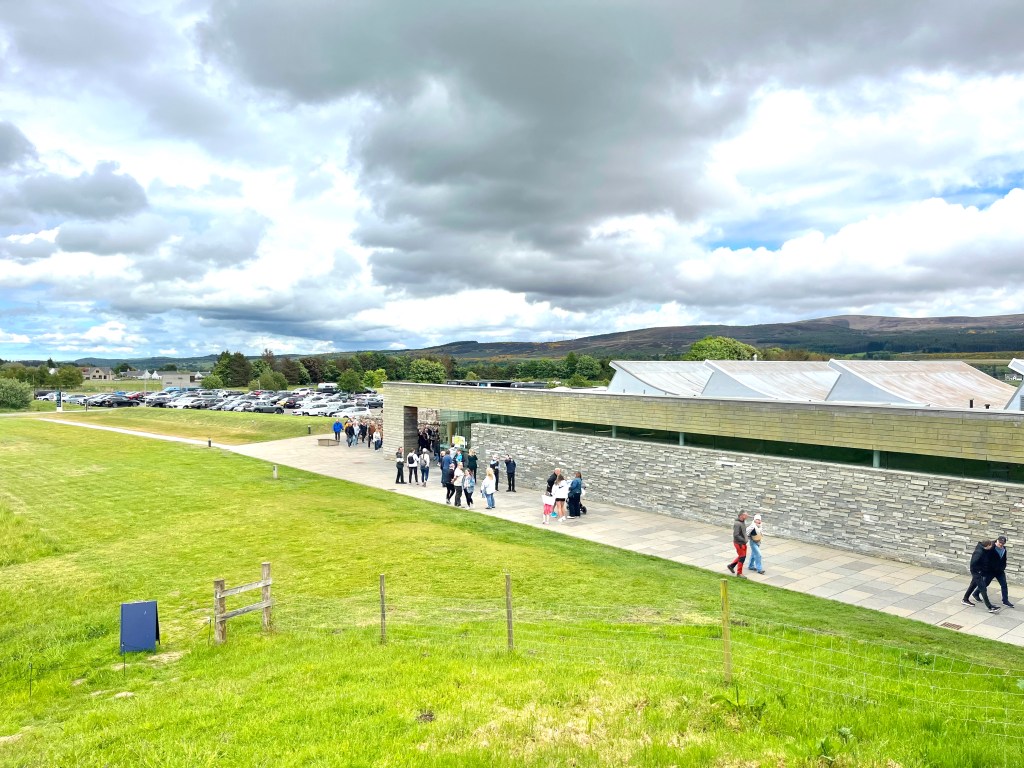
The red flags on the battlefield represent the positions of the Government Army, the English Army. Blue flags represent the positions of the Scottish regiments. I’m actually on the Battlefield Tour, which is a path going around the entire site of the battle. And once we’re finished here, we’ll go inside to the Visitor Centre, which describes the history of the events before, during, and after the Battle of Culloden.
Inside the Culloden Visitor Centre there is a museum. It takes us on a journey through the historic events, beginning with the Scottish Uprising of 1745.
This began when Prince Charles Edward Stuart landed on the Scottish west coast in July that year. Charles’ father was the son of King James II of England and Ireland, known as James VII in Scotland. James, a Catholic, was forced into exile in 1690. He was then replaced by a Dutchman, William of Orange. William was not first in line but he was Protestant. In those days, that was all that mattered.
By 1707, a political union between Scotland and England had been arranged. This union was deeply unpopular among the common Scots.
The historic Scottish parliament was closed. Scots had lost control of their national sovereignty, while no change. Its parliament simply continued with a new name. The few Scots who now sat in the English parliament at Westminster, had little or no say in how the new state of ‘Great Britain’ was ruled.
Far from being a union of two equal nations, England had taken control of Scotland. A Scottish attempt to end the union was made in the House of Lords in 1713. This attempt failed by just four votes. Unhappiness with the union led to violent Scottish uprisings in 1715 and 1719. And so, the rising in 1745 was another attempt to reclaim Scottish independence and restore the rightful Scottish king.
All of these uprisings had European support, mainly from France and Spain. They were called the Jacobite uprisings, Jacobus is the Latin name for James. And so, a Jacobite was the name given to anyone loyal to the exiled King James II and his descendents.
The Culloden exhibition tells the story from both the Scottish and English sides. There are also objects and archaeological discoveries from the time on display. The museum uses technology to help re-create the battle itself. A 360-degree battle immersion theatre puts you into the heart of the fighting. It offers a very moving experience from a soldier’s perspective.
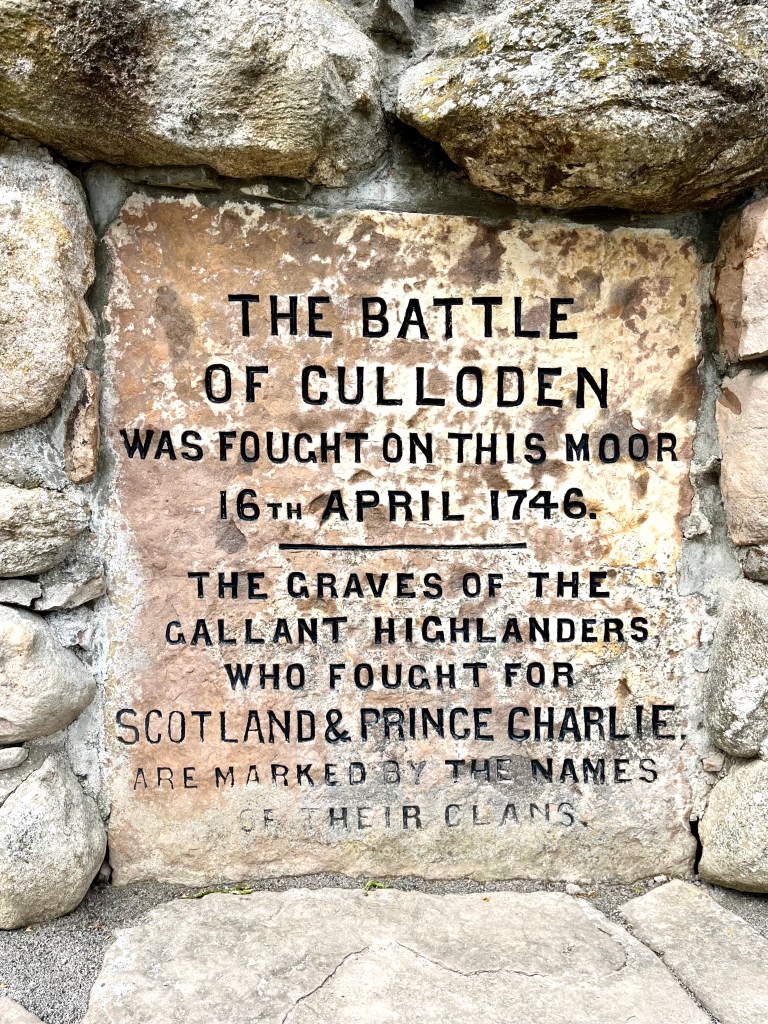
Archaeological finds from the battlefield have given us a better understanding about events on the 16th of April 1746. These include musket balls, buckles and a small Scottish pewter cross that was likely dropped during the battle.
The English victory at Culloden ended the uprising. The brutal fighting lasted less than an hour. There were relatively few English casualties.
However, Scots killed on the day of this Anglo-Scottish conflict, about 1,500, were few compared to those massacred in the days and weeks after. The Scottish historian, Professor Murray Pittock, has described the horrors carried out by the British or Government Army.
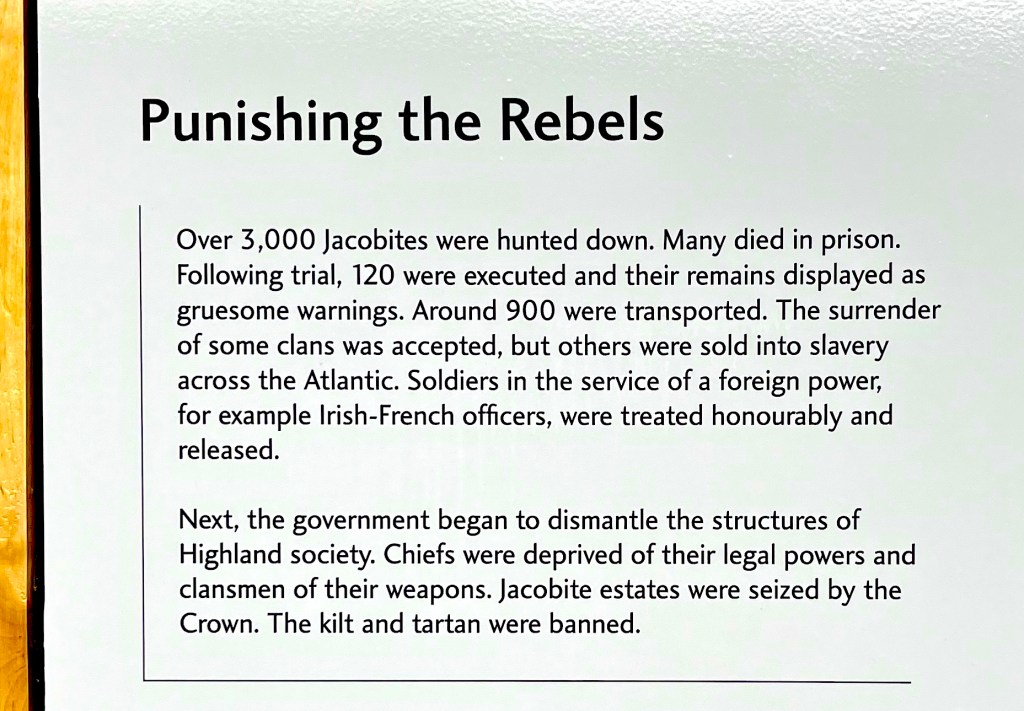
No one was spared. Surrendering soldiers, the wounded on the battlefield, and civilians were murdered in an orgy of violence. Crops were burned and people were left to starve. Other Scots were driven from their land or sent into exile across the Atlantic.
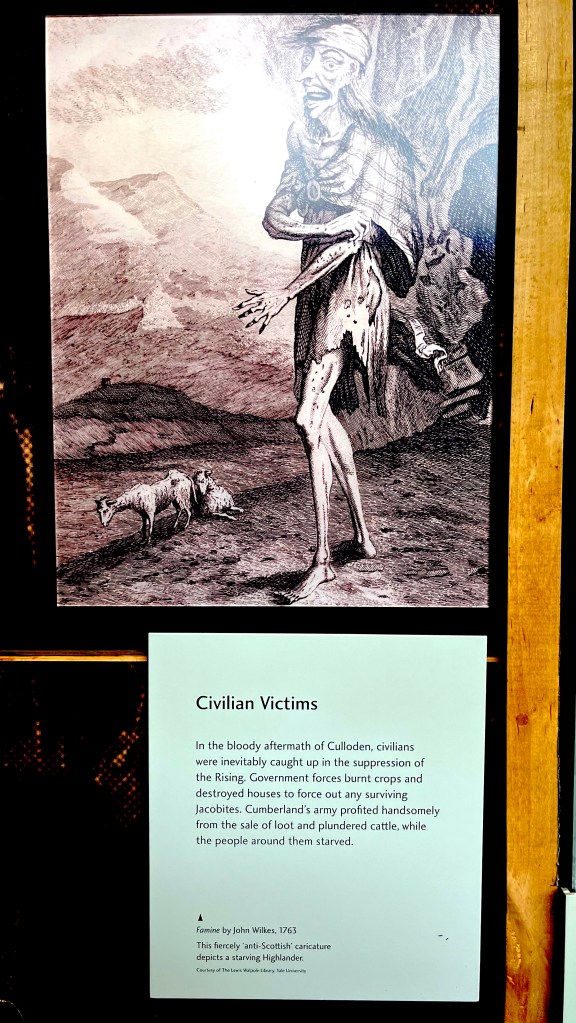
The English commander, the Duke of Cumberland, became known as ‘Butcher Cumberland’.
Today we would describe these events as genocide and ethnic cleansing. It was a dark era in Scottish history that has never been forgotten.
..
Written and narrated by Peter Young for The School Times International, an English-language educational magazine published in Denmark. Images by Peter Young for School Times Publications.


Don’t think you can label the two armies at Culloden as “Scottish” and “English”. There were Scottish clans on the Hanoverian side. There were fathers and sons, brothers fighting on opposing sides.
LikeLike