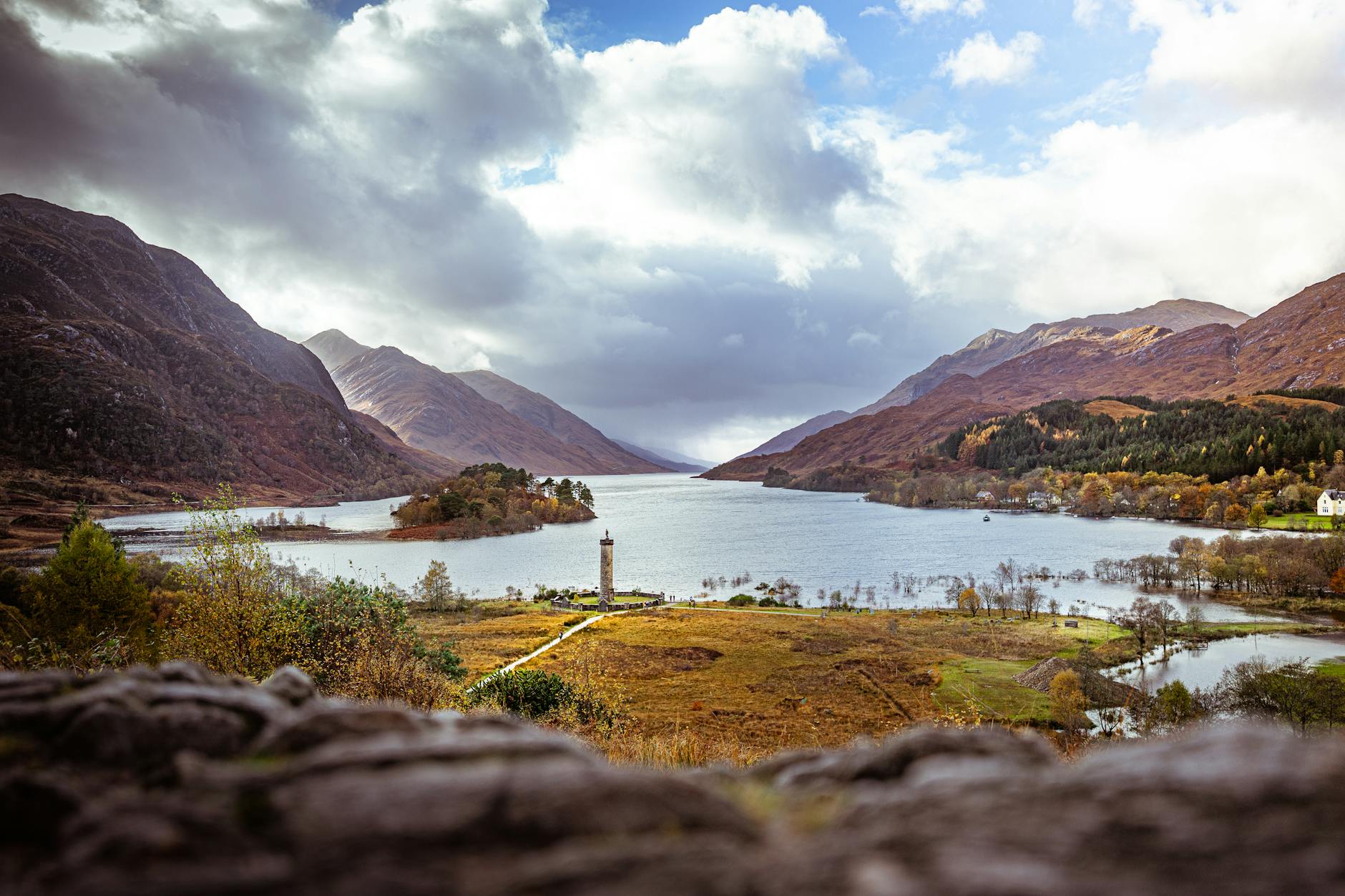
Norrie Hunter played ‘Come By The Hills’ just before his interview with Sara Salyers on Valentine’s Day. It’s a song I once performed in front of a large auditorium [audience] in Berkshire in the mid-1970s.
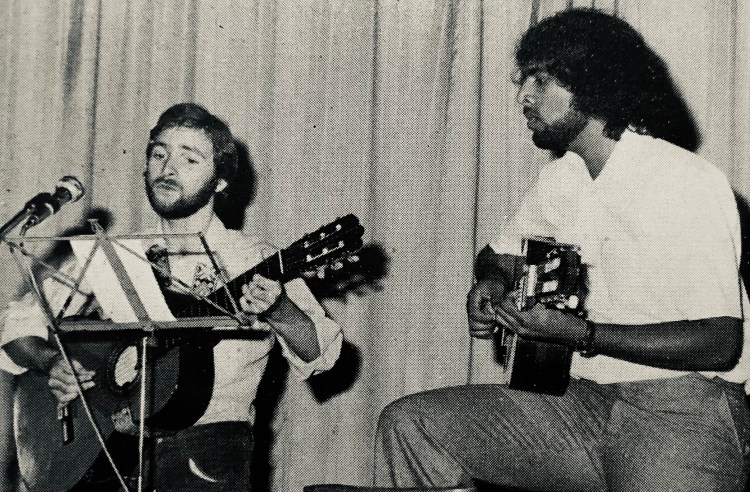
I was accompanied on guitar by Tom, and Indian-American friend, who was a far more accomplished guitarist than I was. If Carlsberg did ‘Clapometers’ — it was an arrangement that the audience liked. I believe we won what was some kind of talent-night event.

Oddly enough, I first heard the song on a recording that my German room-mate, Michael, was playing in the student dorm. He was a great fan of Irish and Scottish folk music, melodies that are part of our Celtic identity.
And it was the Scottish identity that Sara Salyers talked about during her interview with Norrie Hunter. It is just one of the topics in a long and wide-ranging interview. “We have to know who we are,” she said. “Our identity is embedded in the values we’ve put into the Scottish constitution over the centuries,” she continued.
In the early years of my exile I discovered that many of the foreigners with whom I became acquainted, like Michael, had a better concept of the Scottish identity than I had – a native Scot! Seemed deliberate de-construction of Scottish identity and nationhood had not reached all parts of Europe. As it says in ‘England’s Vassal State’:
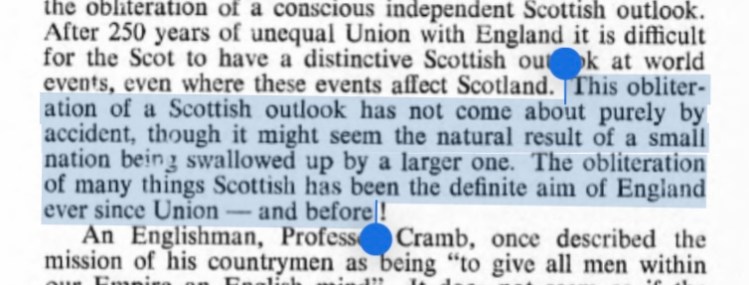
“This obliteration of a Scottish outlook has not come about purely by accident, though it might seem the natural result of a small nation being swallowed up by a larger one. The obliteration of many things Scottish has been the definite aim of England ever since Union, and before!”
As I recorded Norrie’s Caledon Radio interview, I became a bit distracted, familiar music from another era can do that to you. I knew I had to re-listen during editing, so I gave in to the haunting melody which evoked a largely forgotten past, an England of the 1970s. It was a place and time where I sensed ‘being foreign’ in a way I’ve never experienced in my later exile in the Nordic region.
Long forgotten student memories came flooding back as I listened to ‘Come By The Hills’. There was the friendly Mr M – who, as it turned out, had been in the B-Specials – at least that’s what he confided in me one day. His was an exile altogether different from mine, apparently. Then there was Hans, a Swede, whose wedding I attended in the late Seventies during a surreal Mid-Summer of sea and sky on the west coast of Finland. We collected scented Lilly of the Valley flowers on a remote island for the church the evening before. It was stunningly beautiful, although paradise was home to the most aggressive mosquitos I’ve ever encountered. Last I heard of my room-mate, Michael, he was as far from his native Darmstadt as he could be – Alaska.
Norrie generously allowed me to stream his Valentine’s Day show as a ‘listen again’ on TwitterX and on YouTube. It is another fabulous interview and credit to Norrie for a professional job which allowed Sara to explain Salvo, sovereignty, and so much else, without unnecessary interruption.
During the past week I created a few audiograms for the @indyscotnews feed. Some of them generated quite a bit of traffic, not least the one featuring Sara and Scottish identity. Two others, also proved popular. Carwyn Jones on Scottish sovereignty, and a response by Lloyd Quinan, to the truly appalling display of ignorance by the Westminster leader of the SNP.
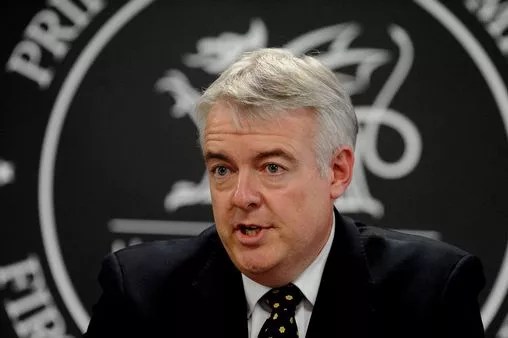
Stephen Flynn stated the Westminster parliament was sovereign ‘on these isles’. However, four years earlier the former First Minister of Wales stated the truth. It was a lesson in constitutional law from Wales to Scotland.
“In 1689, the Earl of Shaftsbury said that the English parliament was sovereign. But the English Parliament doesn’t exist anymore. The English Parliament disappeared in 1707, as did the Scottish Parliament. [In] the Parliament of the United Kingdom, there is no law at all that says that that is sovereign.
“And the reason why that’s important is because in Scotland, there’s no concept at all of parliamentary sovereignty. The Declaration of Arbroath, which you’ll all be familiar with, of course, says that sovereignty in Scotland rests with the people. That’s still the case today in Scots’ Constitutional Law. Still the case.
“And the Scottish courts have expressed an opinion in that regard, particularly in cases in the Fifties to the Seventies. What does that mean in practice? It means that if this clause becomes law, Scotland will have imposed on it a form of sovereignty that, firstly doesn’t exist in Scotland, and secondly, cuts across the Treaty of Union in 1707. And the Scottish courts have said that is something that they are willing to look at, in terms of its justiciability.
“Doesn’t affect us in Wales, I grant you, because our court system was abolished gradually between 1536 and 1830. But this actually is a fundamental attack on the 1707 Treaty of Union in Scotland.
“I’ll leave it to the Scots to fight their own battle, but it’s something that just hasn’t been noticed. Parliamentary sovereignty has never been part of the law of the United Kingdom with regard to the Parliament of the United Kingdom, apart from now.” (Carwyn Jones)
What is the point of £90k-per-annum Stephen Flynn? He’s as much use to the Independence movement as a pair of pyjamas is to a cat. As Scotland’s Unicorn tweeted the other day:
“The worst thing we ever did was to give politicians a wage at least 4 times the average and access to expenses. All we achieved while making THEIR lives better was to worsen ours. We created Tories. Of any colour. They forget to work for the people and work only for themselves.”
Truer words were never spoken. Our 56 were followed by our 35 and then another 48, and achieved nothing except self-enrichment. They became Tories in all but name.
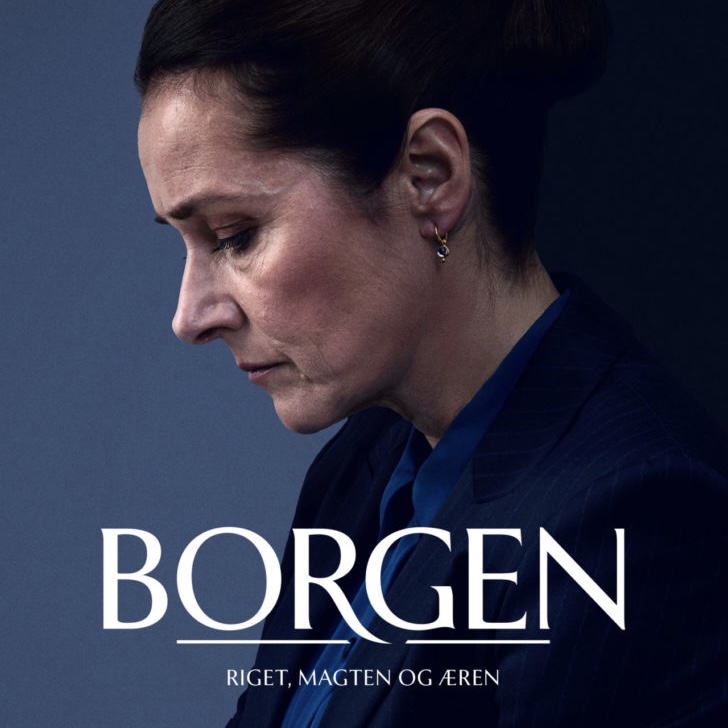
This is a letter from Denmark, so it would be out of character not to mention Series 4 of the Danish political thriller, Borgen. Some themes familiar to Scottish voters are touched upon throughout. A minister who no longer represents the party’s main policy; text messages that show a minister lied; discussions about the exploitation of the territorial resources of another nation, and not least, foreign policy decisions regarding global superpowers, in which Denmark is essentially a vassal state.
A number of episodes illustrate the alienation of voters from the politicians they voted for. The disenfranchisement of the people – post-election – as those elected, u-turn on manifesto pledges that got them elected. Power and political intrigue replace public service. It’s a worthwhile watch if you haven’t seen it, though perhaps too close to reality to make for comfortable viewing.
This brings us back to Sara Salyer’s interview on the Norrie Hunter Show (see YouTube link below). The topic of Swiss-style direct democracy came up once again. The context was the character of Scottish democracy, post-independence – its governance and system of government. A total break with failed English parliamentary politics is necessary. Interestingly, embracing Swiss-style direct democracy would be a return to the pre-Union Scottish governance model. For more on that, I suggest bookmarking the Norrie Hunter Show from Valentine’s Day, it was as much a love song to Scotland as Come By The Hills is a love song about Scotland.
As Sara said, the Second Scottish Enlightenment has begun. Key to that is reversing the effects of the ‘axis of ignorance’, that is the British state propaganda media. Salvo.scot and liberation.scot have a non-political party strategy. Politicians have failed us. The lights are on in party HQs, but there’s almost nobody home. There is another way.
“Come by the hills to the land where legend remains.
Where stories of old fill the heart and may yet come again,
Where the past has been lost, but the future is still to be won,
And the cares of tomorrow can wait till this day is done.”
 peteryoung.dk