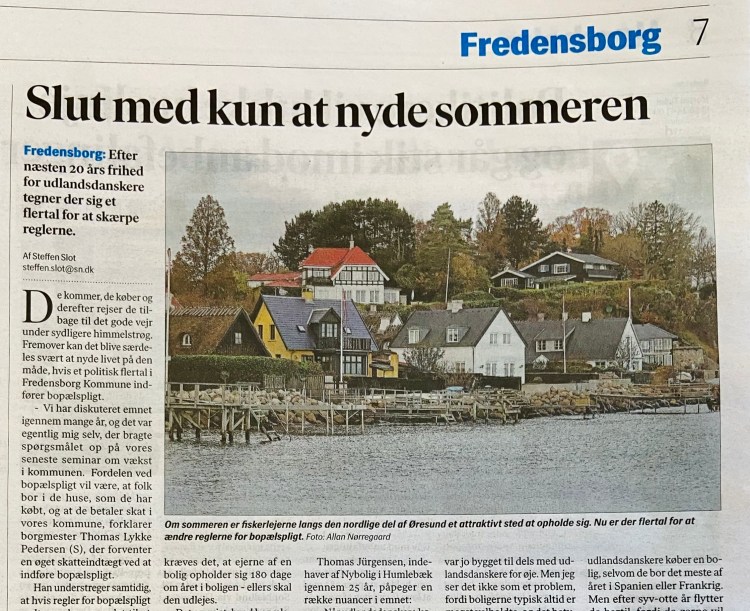
The headline that caught my eye was: “Fishing village now off-limits for Danes based abroad” (Fiskerlejer bliver lukket land for udlandsdanskere). Turns out, the classy properties in the little fishing village just east of here, can now only be bought by Danes abroad if the houses are occupied 180 days per year.
This area has been popular with wealthy Danes overseas, as there has been no demand to actually live in the second home you own. But the Social Democratic run council wants to change the rules – and yes, the local council has the power to do this. Who knew?

There would be a tax windfall for our council coffers if the 223 houses, currently vacant for more than a year, were lived in. That’s the hope, at least. Controversial? Yes. But an attempt to make sure properties in prime locations don’t sit empty all-year round. Of course, the issue of ‘second homes’ is not unique to this part of the world. But at least here, something is being done about it.
By the way, if you think this proposed legislation is a bit harsh, wait till you hear the rules for foreigners trying to buy up property. Denmark, unlike Scotland, is not for sale.
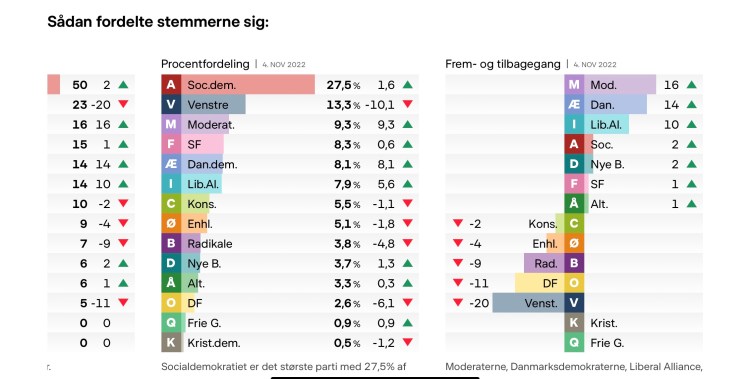
The absence of a foreign, Unionist aspect to the Danish political scene gives you more objective, straight-talking pundits. It certainly seems that way to me. There’s none of the tribal tolerance of the ‘morally compromised’ you see in Scottish media. Perhaps because there are no parties from large neighbouring countries sitting like cuckoos in the nest. A case in point is the mainstream use of the term “klovnebus” (clown bus) for the new party, Moderaterne. They did well at the last election, led as they were by a former PM, who established the new center party. They came from nowhere to become the 3rd largest group in parliament with 9.3% of the national vote. This translated into 16 ‘mandater’ – seats in parliament. However, at the time, they were described as a clown bus by commentator Lars Trier Mogensen. He warned against basing a government coalition majority on the untried and mostly unknown Moderaterne. Trier Mogensen’s predictions have been more or less prophetic.
Three resignations/exclusions have taken place during Moderaterne’s short time in government. The reasons? Lies about business experience on a CV, and two cases of sexual misbehaviour, one of which has been referred to the police. How on earth can a party not know that their candidate has a relationship with an underage girl? Whither vetting?
“New parties are perceived by dodgy people as their chance,” said one pundit. “Of course, it happens in the established parties, but it’s easier to gain entry to a new one as the vetting may not be as strict.” That was the gist of the recent discussion on Danish TV2’s political debate programme. A serious broadcast but with an undercurrent of ‘Have I Got News for You’.
It illustrated certain similarities among the political ‘elites’ of our two nations. Terms such as ‘klovnebus’ (clown bus) and ‘souce tog’ (gravy train) are quite mainstream and not restricted to the blogosphere. The descriptions of low-grade politicos, who see politics more as a route to personal enrichment, were familiar. On a darker note, it was suggested that political status can be seen by some as a way to camouflage perversions or personal moral failings. In other words, fertile ground for the chancers and spivs of this world.
Michael ‘fresh-start’ Shanks, now on £87k plus expenses, comes to mind as the latest amoral lobby fodder offering Scottish votes for English rule. He certainly had no problem toeing the party line against a ceasefire in Gaza. And any number of other ScotPols have shown us their personal moral failings, oddly enough without feeling any need to resign.
Government majorities in Denmark, never mean party majorities, they refer to a majority red block or a blue block. Thanks to the straightforward voting system, with no list votes or confusing ranking of parties in order of preference, the basic percentage of the national vote determines the number of seats a party gets. And the low, 2% cut-off point ensures broad representation.
Recent developments have left some voters pretty disillusioned, though. The current government consists of three parties, each of whom – during the election campaign – ‘promised’ never to work together with their current coalition partners! The strange red-blue government carries a stench of voter betrayal, and this has, inevitably, led to splits. Betrayal of voters, now there’s a familiar theme.
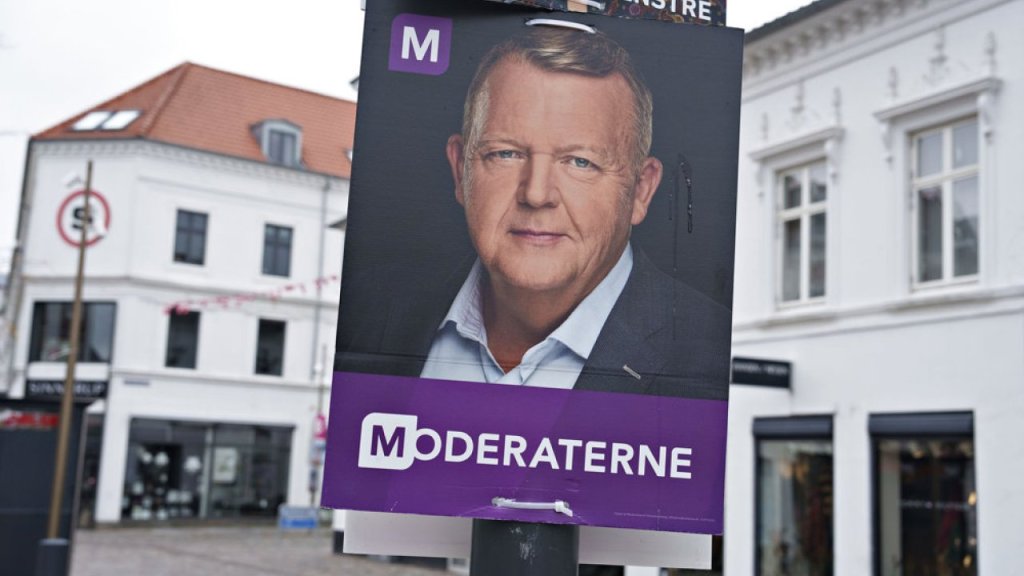
A red majority was returned in November 2022, but PM Mette Frederiksen did not want to govern with a ‘narrowly-mandated coalition’. Another motive, of course, may have been the antipathy she felt from other members of the red block. It was half-expected that she would step down as PM after various scandals. But a blue-red coalition suddenly became a possibility because of Lars Løkke Rasmussen (usually referred to as ‘Lars Løkke’) and his ‘Moderaterne’ mentioned above. So it’s ironic that PM Mette Frederiksen’s Red-Blue coalition of convenience, entered into for ‘stability’, is falling apart after only a year in office. Dodgy coalitions are not unique to Denmark. The extent of the damage being done by the zany Green-SNP coalition in the current Scottish Parliament may first be measured at #Holyrood2026, as almost no one is up for resigning – despite catastrophic failures, both personal and policy-wise.
With 12 parties in the Danish parliament, it’s sometimes difficult to keep track of who or what is running the country. The political conjuring trick is to maintain a kind of muddled equilibrium, iand sustain the ‘hygge quotient’ that keeps Danes more or less satisfied.
Anyway, it may all be leading to an early general election. That’s certainly my wife’s wish – now a Danish citizen. This means that after four decades she’ll be able to vote in more than regional and EU elections. However, she was not entirely happy with the citizenship process. Why not, you may ask. After all, since she was a Nordic, there was no language or ‘Danishness’ test, she just had to apply. Well, Icelanders are a proud people and her adoption as a ‘new Dane’ (no, that’s not considered a racist or demeaning term here) did not live up to the standard. She was expecting a ceremony (like mine), to shake the hand of the local mayor, receive small presents, a book and be part of a ‘citizenship party’. She feels a bit cheated. “How come you got that elaborate ceremony, and all I got was a letter? I even had to pick up my passport from an anonymous mail box!” She did see the funny side of my ‘discount Dane’ quip, though.
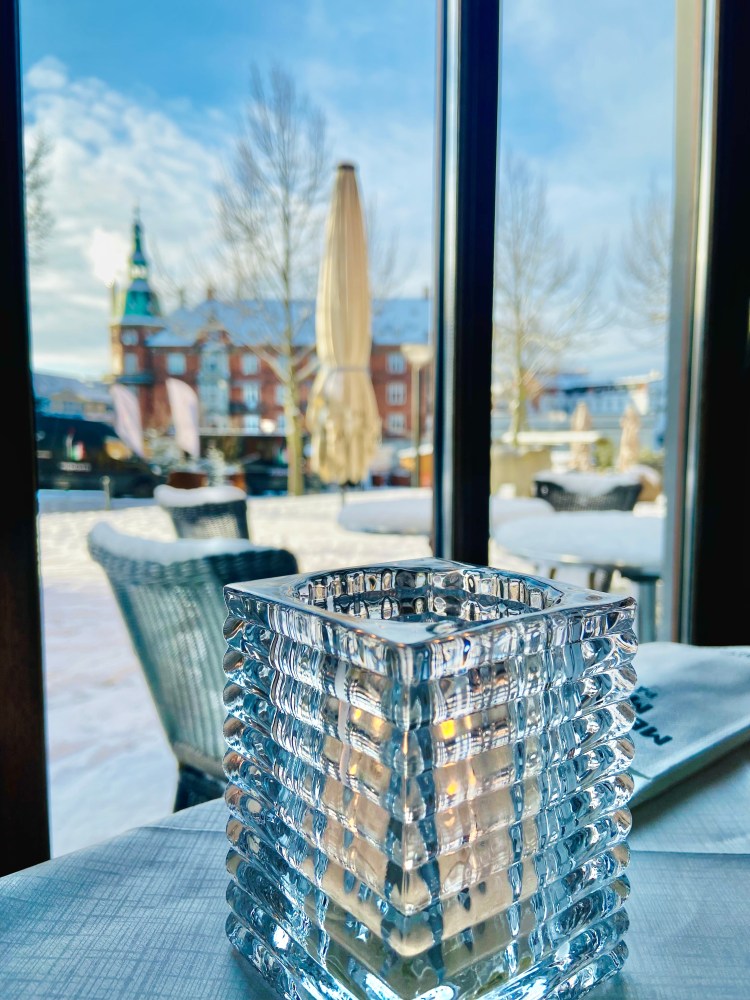
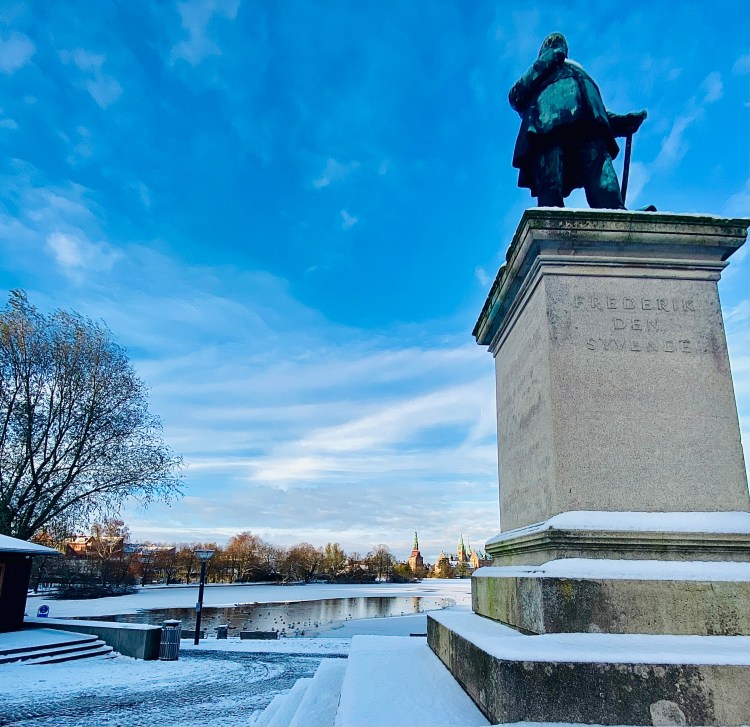
The first serious snow of winter has fallen and most people have their winter tyres on by now. We made a slither-free trip to the small town of Hillerød. I’d invited my fellow new Dane to lunch. The town looked almost fairytale like with its winter coat. We took a wee donner afterwards, and came across the ‘Catholic Center’, a rarity in Lutheran Denmark.
The heavy door, activated by some kind of motion sensor, swung open as I approached. There were lots of brochures, and rosaries in a glass case, along with some statuettes and icons. To the right, there was a small chapel. I waited until a young Latino-looking man had finished his quiet meditations.
There was holy water, just as there used to be at St Annes on Bluevale Street, where my mother was a parishioner.
I lit four candles, as you do, to the departed and for the living. It’s something I began on my European travels. My mother, probably sad I didn’t adopt her faith, always asked me to light a candle for her when I visited churches or cathedrals, these were invariably Catholic. In retrospect, her religion was perhaps another thing that made her Glasgow upbringing difficult?
Here, on a foreign shore, the all-too-familiar theme of Scottish-style religious bigotry doesn’t exist. There are no Orange walks, and no anti-Catholic or anti-Irish sentiments in society, and certainly not at football matches. Unfortunately Islamophobia does exist, in certain circles, fuelled by the West’s demonisation of muslims post-9/11. All in all, though, most second and third generation children of we immigrants are as Danish as they come. Truth is, naturalisation and integration into another nation’s culture takes several generations, not a mere temporary residence.
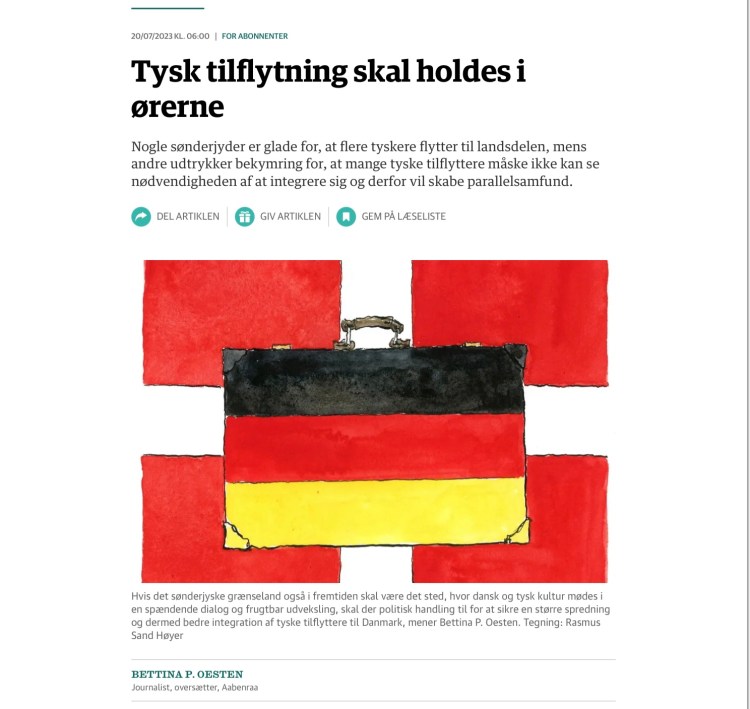
The only area where a ‘settler class’ could be an issue is in southern Jutland – Germans are crossing the border in increasing numbers. We Scots are certainly familiar with an influx of settlers from our larger southern neighbour. Unlike Scotland, though, with its growing settler class, there are comparatively few Germans in Denmark. They are for the most part located around the borderland and in summer on the west coast. That said, some commentators have warned about the danger of parallel cultures emerging. Integration, or the lack of, is something to be monitored, apparently. It’s what small independent countries do. We ignore it at our peril.
 peteryoung.dk