I looked up at the sky, as you do on these occasions. If you focus too much on what’s actually happening you risk being blinded by tears.
My older brother was a coffin length opposite me.
“I am the resurrection, and the life: he that believeth in me, though he were dead, yet shall he live.”
And with that, we lowered the remains of my father into the cold earth at Riddrie Cemetary. When I looked up I was the only one still holding a cord. Truth is, in that moment I realised this was the last physical contact I would have wi ma wee Glesga Da.
It was Valentine’s Day in Glasgow.
My current cycling audiobook is ‘Dostojevski’s Final Journey’ (Dostojevskijs Sidste Rejse) by Danish author Leif Davidsen. It details his visits to Russia between 1980 and into this century. I’m not all the way through it yet, so cannae dae a wee Sturgeon and deliver a pseudo intellectual review. But these words from his bio struck a chord: “When my parents broke up, childhood ended.” I understood exactly what he meant. It was those words, and not his decades long Soviet odyssey that finally motivated me to finish this blog.
I’d seen my father only once since the early 1970s. My brother and I ended up on the edge of existence in Easterhouse with my sister’s already overburdened family. Social services were non-existent for us, you just got on with it.
It all came back to me this week when a three-year-old tweet was reposted. I’d been annoyed by the trolling of Andrew Neil:
“Male longevity in parts of East-end of Glasgow are on a par with Sub-Saharan Africa,” he had written.
“There’s not a single tool that [@ScotGov] needs to solve poverty in the East-end of Glasgow that you don’t already have.”
Michael Gray had quoted Neil and stated, “Both [assertions] absolutely false. When will BBC correct?”
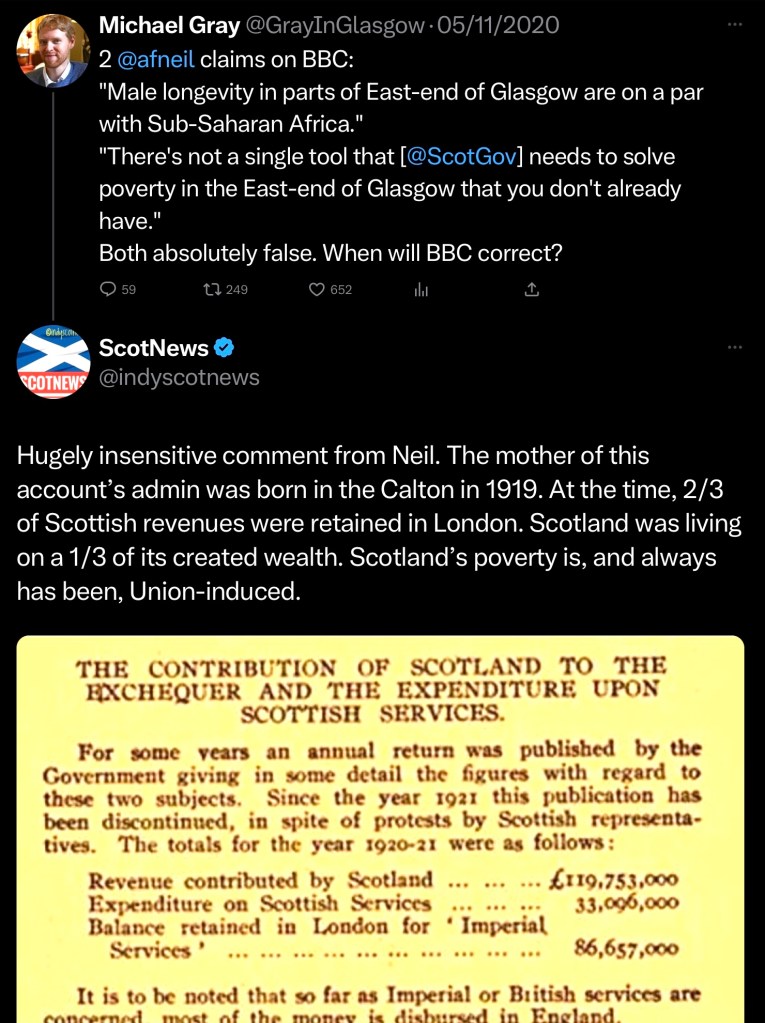
Not sure why this tweet and my response to it re-emerged. But honestly, you don’t know whether to laugh or cry when you hear housejocks like Andrew Neil, Alex Massie, and co, all bad-mouthing the land of their birth.
Most Scots living in a foreign country gain a new perspective on their homeland. What is good, and what could be better – and not least, the Scottish malaise in Union. The housejocks, however, are a breed apart. They call themselves proud Scots while desperate to be considered English. The indigenous folk of England must despise them.
One day, Harry disappeared. Gone for years, no one knew where he was. Then he suddenly showed up at my older sister’s in the 1980s while I was back in Glasgow. “Who are you?” he asked. It was probably the drink. I expect there are lots of people of my generation who experienced similar.
Little did I know then, but he’d spent most of his life living with the scars of an orphan existence during an impoverished childhood.
Children grieve for missing parents as though they were dead. That grief lasts a lifetime, or at least until they do actually die and you turn up to say farewell and grieve a second time.
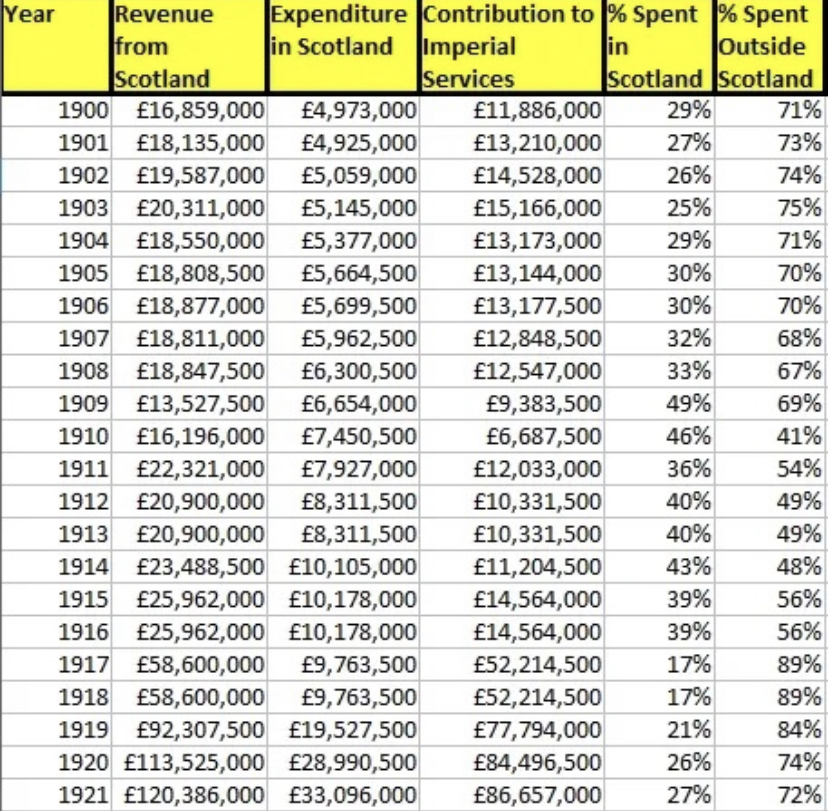
Harry was one year old when the Great war began. During his formative years, Scottish revenues spent in Scotland were as low as 17%. The rest were withheld by London for ‘Imperial Services’. By war’s end, Harry had been taken from his mother and sent to Mossbank Industrial School. He was there until his early teens, as far as we know. Scots were opposed to war. Had our nation been independent like the my adopted homeland, our people would have avoided the 1914-18 Armageddon. And our nation’s wealth would have benefitted our country rather than arms manufacturers.
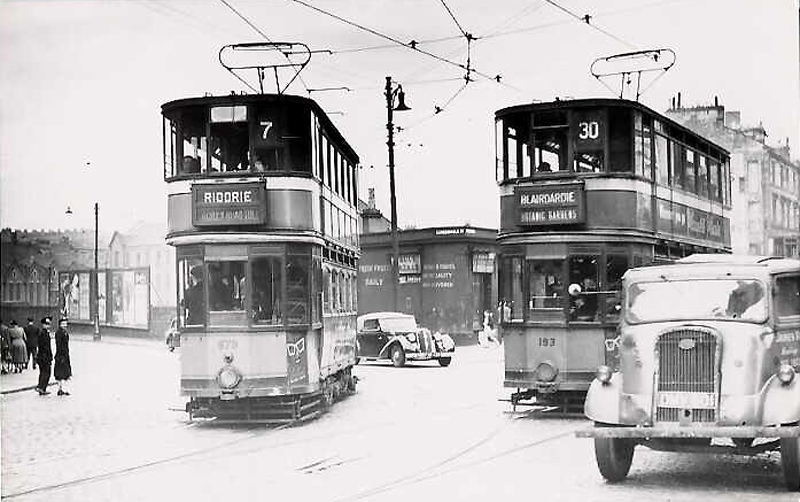
Back on Valentine’s Day, Harry’s final journey from Dennistoun to Riddrie began at the bottom of Westercraigs, just down from my old nursery.
From the window of the veteran black Rolls-Royce, I noticed the walls of the derelict cattle market were still standing. Down to my right was what was left of Duke Street hospital. I suppose Harry must have seen me for the first time there. Poignant images from formative years.
Leaving Westercraigs, we travelled east, very slowly. Waiting at a light, I glanced outside and was staring at my old close. It was almost as if Harry had brought us to a halt. “Five Capstan and a Lucky Bag, remember that son?” On those dark Glasgow nights, I raced down from the top floor of the tenement. The newsagent Birrells was next to our close.
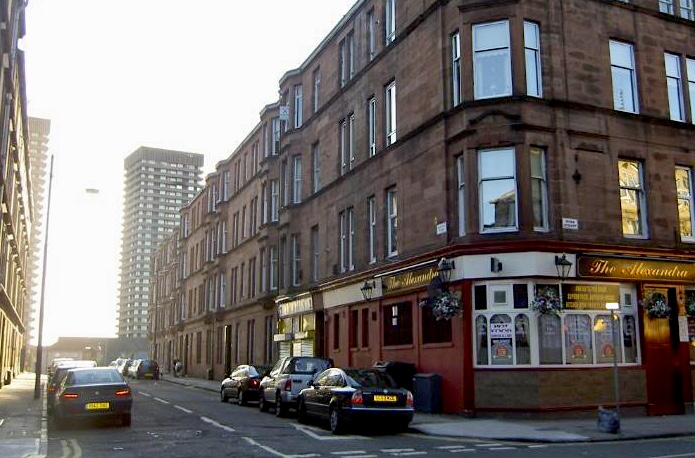
Before the light changed, I managed a glance down Bluevale Street with its brutalist twin towers. I watched them being built. Even as a child I was appalled by their ugliness. Pre-brutalism, I used to wander down Bluevale on my own to stare into the blacksmiths. Aye, they were still shoeing Clydesdales in Dennistoun in the 1960s.
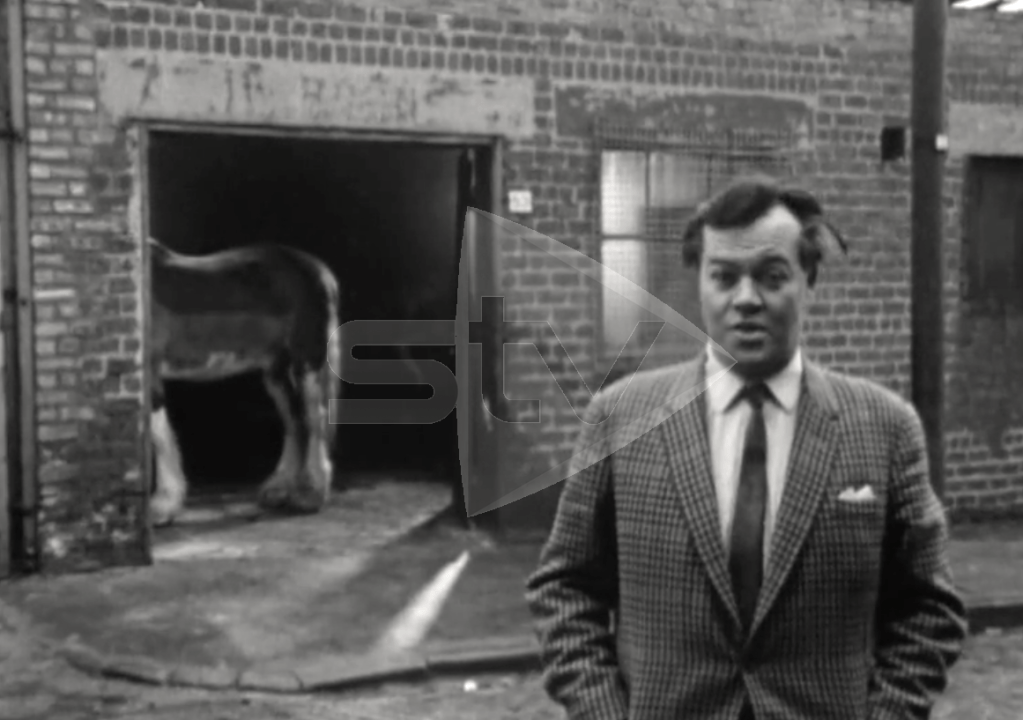
The once familiar streets and lanes we passed were now a vista of urban atrophy. Structural decay overseen by British nationalists with red rosettes. A decay perhaps reflected in the mindset of the people.
We continued, past the pubs and betting shops Harry spent much of his life in. Cumbernauld Road led past Ally Park. I sailed a small boat on the pond as he sat on a stone watching the fitba on the ash pitches.
The old cinema at the top of Meadowpark Street now did Bingo and catering. The after-funeral there was subdued. After all, how do you celebrate a life that was so unfortunate? Perhaps it’s by helping future generations avoid the poverty trap our nation finds itself in?
The colonial exploitation of Scotland is, in large part, the reason for the generational poverty experienced by Scots. Andrew Neil should stick to quaffing his British state-sponsored champagne rather than pretending to understand the cycle of poverty in Glasgow’s East End.
He was at it again last week, quoting from The Spectator.
“The Greater Glasgow area now suffering from the return of “Victorian” diseases like rickets, scurvy and tuberculosis, a consequence of lifestyle, diet and poverty — and despite some of the highest health spending per head in the UK.”
Neil and his NorthBrits love wallowing in stuff like this – regardless of its accuracy. Anything to put the boot into their fellow Scots. It hasn’t occurred to them that Scotland’s poverty of resources comes from being a nation occupied and repressed for hundreds of years. He himself is part of an ongoing information war against our country — lying to the colonial hostages in Scotland about how terrible freedom would be. They rightly criticise delayed ferries, but ignore multi-billion overruns on HS2, unworkable Covid apps, and the likes of Lady Mone.
Shortly after Harry was laid to rest, a reminder of Glasgow’s poverty hit me in the face. I wanted to see the home where he had died. Turned out there were issues with his meagre allowance going missing. My dad should have had a bit of money coming from his pension, but it kept disappearing. He’d complained to my sister, but how much fight do the terminally ill have?
He’d been born into a soul-destroying poverty in Toonheid. A fate inflicted on him by others. And died in poverty eight decades later the victim of theft.
It’s odd the things you keep. I still have the funeral card. The Co-operative Funeral Service numbered us from 1-8. I was number 2. It’s in an abandoned leather wallet along with a few odds and ends, including 2,000 Lira and 100 Austrian Schilling. Random reminders of events and places on the exile journey. The card though, it’s the last remaining link to a person I barely knew, but whose flesh and blood I am.
A mystery emerged from the Riddrie ceremony – the nameplate on the coffin. A middle name had been added. “Oh, that was Harry’s father,” a nephew said. “His mother was married to him at the time.” If only the truth were that simple.
A visit to Martha Street soon clarified his birth name, a simple Harry Young. The lassie there was so kind. She took us aside and showed us the old original ledger. It contained all the extra notes added about his mother, her early estrangement from her husband, the circumstances of Harry’s birth, and her naming of his biological father. It was a fascinating but intensely sad tale.
After hours at Park Circus, I’d traced my dads paternal history back to Dennistoun. His maternal history, though, that took me all the way to Montrose.
Glasgow 2023 and the ugly unseating of Margaret Ferrier has given our colonial careerist class a chance to grab an empty seat on the Westminster gravy train. Keir ‘Death to Socialists’ Starmer has been up, with a flange of his acolytes, in a re-enactment of the 2014 ‘March of the English Imperialists’. We just lacked the Death Star theme.
In Rutherglen and Hamilton, many dyed-in-the-wool Labour NorthBrits will no doubt join Mr & Ms Proud Scot Tories, in giving their vote to a London-based party. By doing so, they’ll ensure England continues its colonial plunder of the Scottish colony. Stupid is as stupid does.
One shaft of light has broken through the clouds, though. Colette Walker of the ISP is standing on an abstentionist platform. Finally, a party has seen sense and decided to follow the Irish example in the 1918 general election. Of course, Ireland was occupied by British troops, which, in a sense, made it easier to identify the coloniser. Scotland though, is thoroughly infiltrated by British colonial security services who should, in theory, be far more difficult to identify. They’re not.
Then again, Scotland is a lot more valuable to the dying empire in 2023, than Ireland ever was in 1919 when the First Dáil met in Dublin. The past 100 years has seen a low-level but constant undermining of Scottish society by our neighbour. By the general election of 1918, the Irish had had enough of this kind of thing. The Sinn Fein posters from the time could, with a few changes, be printed up and used by any Scottish pro-indy party in 2023.
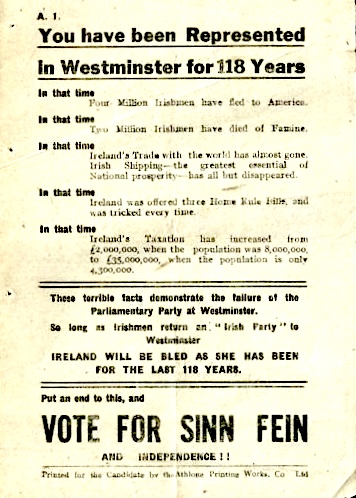
“You have been Represented in Westminster for 118 Years
Sinn fein
In that time
Four Million Irishmen have fled to America.
In that time
Two Million Irishmen have died of Famine.
In that time
Ireland’s Trade with the world has almost gone. Irish Shipping the greatest essential of national prosperity – has all but disappeared.
In that time
Ireland was offered three Home Rule Bills and was tricked every time.
In that time
Ireland’s Taxation has increased from £2,000,000 when the population was 8,000,000 to £35.000,000, when the population is only 4,300,000.
These terrible facts demonstrate the failure of the Parliamentary Party at Westminster.
So long as Irishmen return an “Irish Party” to Westminster
IRELAND WILL BE BLED AS SHE HAS BEEN FOR THE LAST 118 YEARS.”
Like the Irish, idealistic Scottish politicians have entered the political structures of the British state, and either been compromised or crushed. Yet the futility of Westminster was already clear to nationalist Scots in 1932.
“No Scottish measure, promoted by the Scottish members, can be carried in the face of English opposition. Times without number that has been demonstrated. For example, during recent years there have been introduced a series of Bills to grant Scottish Home Rule. Not one of them failed to secure a majority among the Scottish members; but each was hustled out of the House by the Englishmen.” (The Case for Scotland,1932)
There you have it. Majorities of all Scottish MPs – voting as one – failed to achieve anything whatsoever.
I really do wish Colette Walker and ISP well in the by-election. They deserve a higher profile than they’ve achieved so far. Alba may or may not stand, but I fear for them until Alex takes action against those who tried to destroy him. As long as the conspirators bask in Lady Dorrian’s bizarre anonymity, Alex and Alba will continue to be viewed as somehow tainted. The no-smoke-without fire whispers will continue.
However, the ISP standing in Rutherglen and Hamilton is far more significant than we can imagine. Abstentionism is the first step towards bringing them all home, and revoking the toxic Union. It’s the only way to right a historic wrong, done to our nation by 18th-century Scottish oligarchs who signed their country away to London for £20,000 in bribes. Of course, what they could not sign over to London was our sovereignty as a people, since it was never theirs to give. Neither was our territory handed over.
Everything England has extracted from Scotland, since the Union, has been done without popular consent. The Crown of Scotland, the people, have been robbed and exploited by successive colonial regimes in London.
At the time of Harry Young’s birth, the greater part of our national revenues were withheld by Westminster. We limped along on one third of the wealth our nation created. No wonder our parents and grandparents experienced such poverty.
We owe it to those who’ve gone before, as much to future generations, to follow the Irish example, withdraw from the English parliament and strike out for independence.
Epilogue
My father’s final wish was to be buried ‘near his relatives’. As he was was dying, he’d revealed that his maternal family were buried somewhere in Riddrie Cemetery. This was, until then, unknown to any of us. His last wish, at least, was fulfilled. Later, after some sleuthing, we discovered the grave, in the higher part of the cemetery, marked only with a number. Hence the words ‘take me there’, in this musical memory.
 peteryoung.dk